You're Already Teaching Now It's Time to Get Officially Recognised for It
Why AMACS Level 1 Is the First Step for Instructors

If you're currently helping out in a martial arts school taking warm-ups, running junior classes, assisting the head instructor you're already doing the work of an instructor. What most assistant instructors don't have is the formal recognition and the structured knowledge base to go with it. That's exactly what AMACS Level 1 delivers.
This is AMACS Australia's entry-level instructor course, built specifically for teacher helpers, assistant instructors, and senior students who have been training for two or more years roughly purple, brown, or black belt equivalent and are ready to formalise their role in the school.
What You'll Learn in Level 1
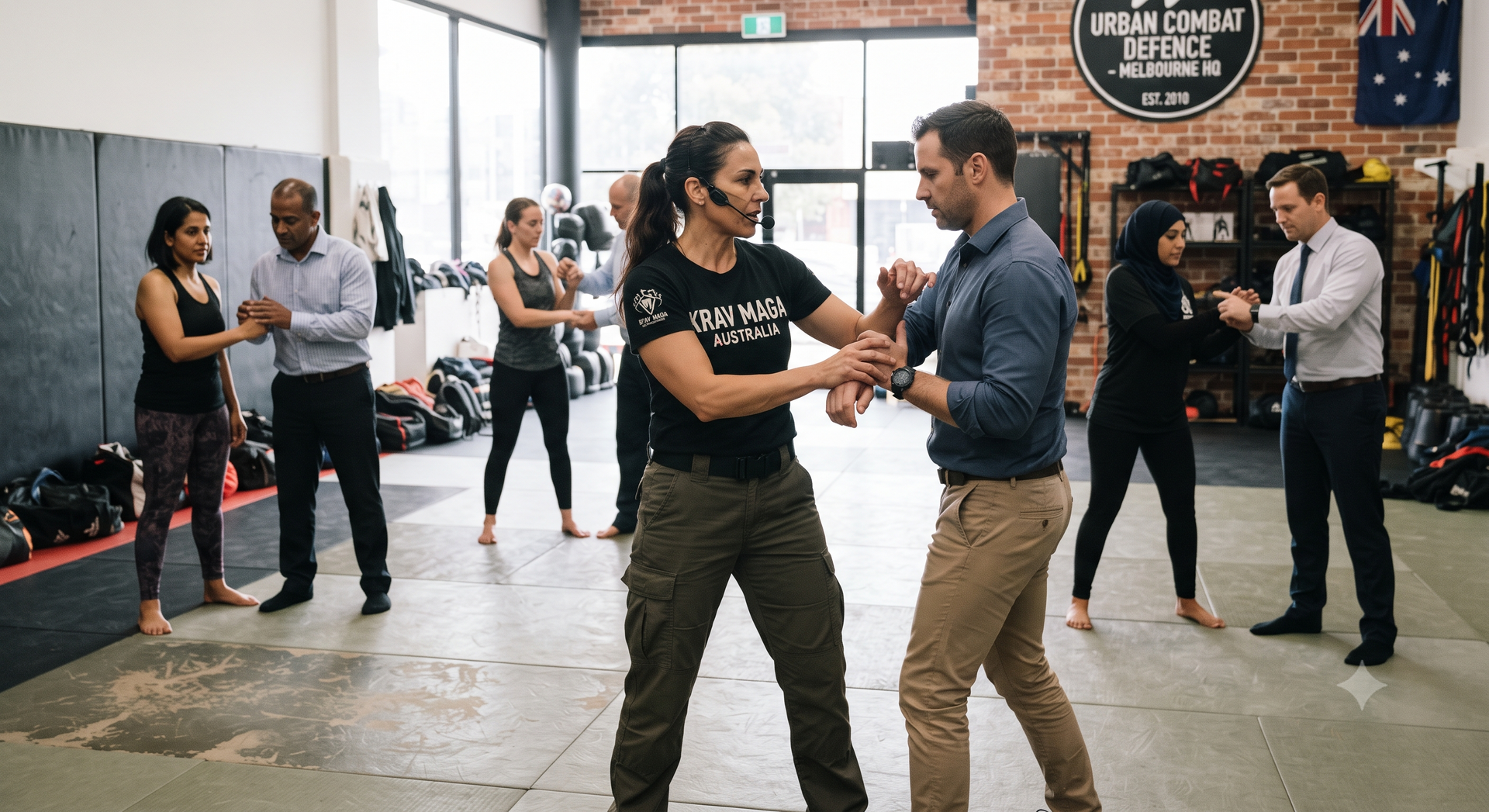
Level 1 covers the core coaching and business operational principles that every instructor needs before they step in front of a class with real confidence. You'll study how to identify participant needs and expectations understanding what students actually come to a martial arts school for and how to structure sessions around those needs rather than purely around technical content. You'll develop the skills to instruct a basic self-defence program, creating a structured curriculum that participants from any background can follow safely and benefit from. And you'll build your understanding of sports science as it applies to martial arts instruction how people actually learn physical skills, what motivates sustained training, and how to get results from students faster.
This isn't a theory course that sits disconnected from what you're already doing. Every unit connects directly to the actual work of running a class, working with the head instructor, and building your credibility as a genuine teaching professional in your school.
Study Anywhere, Start Anytime
AMACS courses are delivered entirely online through the Martial Arts Universities portal at courses.martialartsuniversities.com — which means you study when it suits you, from wherever you are, without needing to attend fixed sessions or rearrange your training schedule. Most students complete Level 1 within a few weeks when they work through it consistently. The maximum time allowed is 12 months, so there's no pressure — but there's also no reason to wait.
Level 1 starts from just US$199, making it genuinely accessible for instructors at every stage. School owners can also enrol their instructor teams together and access group discount pricing ask us how that works.
What Comes After Level 1
Completing Level 1 is the beginning, not the destination. Graduates can progress directly to Level 2, which goes deeper into intermediate programming and performance evaluation, and then to Level 3, which is the full business and school operations course for senior instructors and owners. Each level builds on the last, and completing the full pathway unlocks Certified Senior Instructor (CSI) and Certified Master Instructor (CMI) accreditations alongside 6-STAR School Certification through Martial Arts Australia.
Why the First Step Matters More Than It Feels Like It Does
It is easy to underestimate how much difference a single, structured entry-level course makes to someone who has already been teaching informally for a year or two. The gap most assistant instructors carry is not a gap in ability it is a gap in language and framework. They can run a warm-up and correct a technique, but they have never had to articulate why they structure a class the way they do, or what specifically they are trying to achieve for a beginner versus an intermediate student in the same session.
Level 1 closes exactly this gap. Instructors who complete it consistently describe the same shift: they were already doing many of the right things intuitively, and the course gave them the vocabulary and the structure to do those things deliberately, repeatably, and with genuine confidence when a head instructor or a parent asks them to explain their approach. That shift from intuitive to deliberate is the real value of formal recognition, well beyond the certificate itself.
A Foundation for Every Style
One of the strengths of the AMACS Level 1 curriculum is that it is built around coaching principles and sports science that apply regardless of the specific style you teach. Whether your background is in karate, taekwondo, BJJ, kickboxing, or a mixed curriculum, the content on identifying participant needs, structuring a self-defence program, and understanding how people learn physical skills translates directly to your context. This is part of why AMACS has become a genuinely industry-wide standard rather than a course tied to one particular style or association.
What School Owners Notice
Head instructors and school owners who have supported an assistant through Level 1 consistently report the same practical benefits: the assistant runs a more structured class with less direct oversight required, communicates more clearly and confidently with students and parents, and takes genuine ownership of the sessions they are responsible for rather than simply following along with what the head instructor demonstrated. For a growing school, this is precisely the kind of instructor development that allows the business to expand its class offering without the owner personally supervising every single session.
If you've been teaching without formal credentials, Level 1 is where that changes.
Recognition That Employers and Insurers Also Respect
Formal recognition through Level 1 is not only about how students and parents perceive you. Increasingly, school owners looking to bring on paid junior instructors, and insurers assessing a school's risk profile, are asking whether instructional staff hold genuine, verifiable qualifications rather than relying purely on belt rank as a proxy for teaching competence. An assistant instructor who can point to a completed AMACS Level 1 certificate is in a considerably stronger position when applying for a paid coaching role, and a school that can demonstrate its instructor team holds formal qualifications is in a stronger position when its own insurance and risk profile is assessed.
A Realistic Picture of the Study Commitment
Prospective students sometimes hesitate before enrolling because they are unsure how much time the course will actually demand alongside their existing training and, often, a full-time job. In practice, Level 1 is structured in manageable units that most instructors work through in short, focused sessions rather than requiring large blocks of dedicated study time. Because the material is delivered online and self-paced, instructors can complete a unit during a lunch break, in the evening after training, or across a quiet weekend whatever fits their existing life, without needing to rearrange work or training commitments around a fixed class schedule.
How Level 1 Connects to the Wider AMACS and Martial Arts Australia Network
Completing Level 1 is not an isolated transaction — it plugs you into a broader professional community. Through the connection between AMACS and Martial Arts Australia, graduates gain access to a network of thousands of instructors and schools across the country, along with the resources, discussion, and professional development opportunities that come from being part of a recognised industry body rather than operating in isolation within a single school. For instructors who have only ever trained and taught within one club, this broader connection is often one of the more unexpectedly valuable aspects of formal certification it provides perspective on how other schools operate, what other instructors are doing well, and where the wider industry is heading.
The Real-World Difference Between Recognised and Unrecognised Teaching Experience
There is a meaningful, practical difference between an assistant instructor who can say "I've been helping out for two years" and one who can say "I hold a formally recognised Level 1 instructor qualification through AMACS." The first statement relies entirely on the listener trusting an informal, unverifiable claim. The second statement points to a specific, checkable credential backed by a structured curriculum and an established industry body. For a school owner introducing a new instructor to nervous parents, for an instructor applying for a paid coaching role at another school, or simply for the instructor's own sense of professional legitimacy, this difference is considerably more significant than it might first appear.
Getting Started Right Now
There is no waiting list, no fixed intake date, and no need to coordinate with anyone else before you begin. You can create an account at the course portal, pay the modest enrolment fee, and start working through the first unit within minutes of deciding to do it. For an instructor who has been meaning to formalise their teaching for a while but has kept putting it off, removing every practical barrier to starting is precisely the point of how AMACS has built its enrolment process.
Instructors Who Started Exactly Where You Are Now
Every Certified Master Instructor currently teaching within the AMACS and Martial Arts Australia network began at exactly the same starting point Level 1 is built for an assistant instructor or senior student with genuine passion and hands-on experience but no formal credential yet to show for it. The pathway from there to Certified Senior Instructor and Certified Master Instructor status is well trodden, clearly signposted, and entirely achievable at your own pace. Level 1 is simply the first, deliberately accessible step on a path that many respected instructors across the country have already walked.
Share
Teaching Self-Defence Professionally: The Course Built for Instructors Who Work With Real-World Risk