Teaching Self-Defence Professionally: The Course Built for Instructors Who Work With Real-World Risk
Why the Professional Defensive Tactics Course Is Different to Standard Martial Arts Instruction
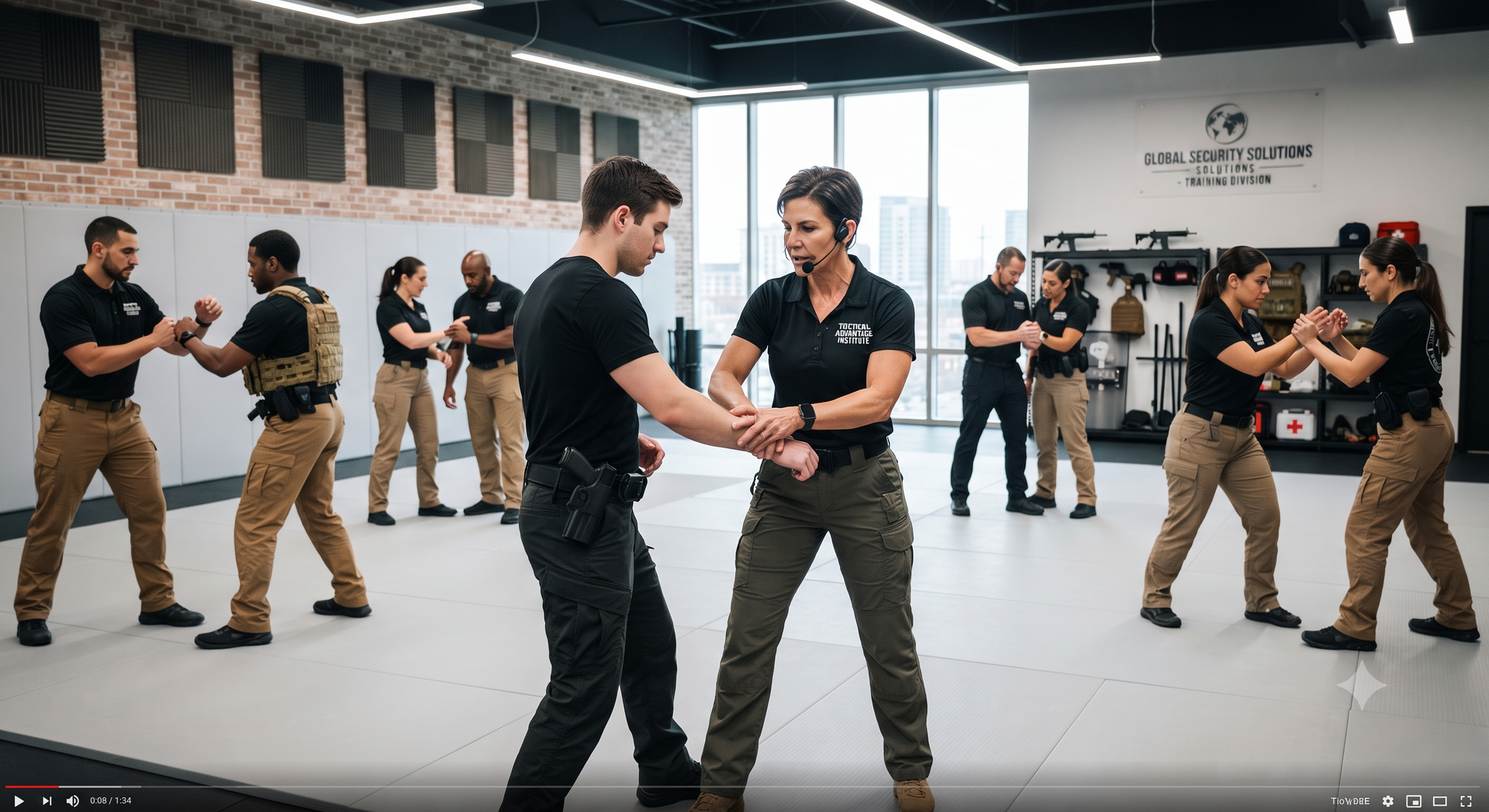
There is a significant difference between teaching martial arts in a traditional dojo environment and training people to respond effectively to real-world violence in a professional or community context. The students are different, the stakes are different, the scenarios are different, and the teaching approach needs to reflect all of these differences.
The Professional Defensive Tactics Course (PDTC) from AMACS is built specifically for this second context — for martial arts instructors, security professionals, and self-defence educators who are working with people who may face actual physical threat in their professional or personal lives, and who need practical, reliable skills rather than sport-oriented technique.
What Makes the PDTC Different
The PDTC integrates scientific research from neuroscience with the practical approaches developed across Law Enforcement, Security, Military, and Martial Arts — a combination that produces programs that are not just theoretically effective but genuinely functional under the stress and uncertainty of real incidents.
The Core Tactical Strategy at the heart of the course provides a responsive framework for both verbal and physical aggression. It takes harm minimisation, duty of care, and occupational health and safety into account at every stage — because teaching people to respond to violence without addressing these considerations is not responsible professional instruction.
This system has been used to train over 10,000 security officers in Australia, the United Kingdom, and North America. That track record is not marketing language — it's evidence of a curriculum that has been tested in real professional contexts and has produced instructors capable of training others in environments where effectiveness is non-negotiable.
Who This Course Is For
The PDTC is ideal for security personnel who want to develop their capacity to train others, not just apply defensive tactics personally. It's for martial arts instructors who run community self-defence programs and want a more systematic, professionally credible curriculum to underpin that offering. It's for schools that serve clients with elevated personal safety concerns — workplaces, correctional environments, community organisations.
It's also for martial arts school owners who want to expand their offering into corporate safety training, community self-defence courses, or other professional training contexts. The PDTC gives you the curriculum, the professional framework, and the credential to do this confidently.
Why Neuroscience Matters to a Defensive Tactics Curriculum
Under the acute stress of a genuine violent encounter, fine motor control degrades significantly, cognitive processing narrows, and complex, multi-step techniques that work reliably on a calm training mat frequently fail entirely under real pressure. This is a well-established finding in the neuroscience of stress response, and it is precisely why the PDTC is built around simple, gross-motor, high-percentage techniques rather than the more elaborate technical repertoire common in traditional martial arts instruction. Instructors trained in the PDTC understand not just what to teach, but why the specific simplicity of the Core Tactical Strategy is a deliberate design choice grounded in how the stressed human body and brain actually perform under threat.
Occupational Health, Safety, and Harm Minimisation as First Principles
A defensive tactics program that ignores occupational health and safety, or that fails to build in genuine harm minimisation principles, creates real liability exposure for the organisations that adopt it — whether that is a security company, a correctional facility, or a martial arts school running community programs. The PDTC treats these considerations as foundational rather than an afterthought, which is part of why it has been adopted at scale by organisations where liability and professional accountability are taken seriously as a matter of course.
Building a New Revenue Stream Through the PDTC
For established martial arts school owners, the PDTC represents more than a personal credential — it is a genuine pathway to a new, professionally credible service offering. Schools that add corporate self-defence workshops, community safety programs, or specialised training for security and frontline staff, underpinned by the PDTC framework, are able to reach audiences and revenue streams well beyond their existing traditional student base, while doing so with a curriculum that carries genuine professional weight rather than an improvised program built without a tested foundation.
From Technique to Genuine Teaching Capability
A meaningful distinction the PDTC draws early is between being personally capable of defending yourself and being capable of teaching that capability reliably to others, including people with no martial arts background at all. Many highly skilled martial artists have never had to break down a technique into a form simple enough for a security guard, a nurse, or a community member with zero prior training to genuinely retain and apply under stress. The PDTC's instructor-focused curriculum is built specifically around this teaching capability, not simply around demonstrating the techniques competently oneself.
A Credential That Travels With You
Because the PDTC has already been adopted across security, law enforcement, and military-adjacent training environments in multiple countries, instructors who hold this credential carry a qualification that is recognised well beyond their own school or local martial arts community. For instructors considering work in corporate training, security consulting, or community safety education as a genuine career direction, this portability is a significant practical advantage over a credential recognised only within a single style or association.
Responsible Instruction Starts With Honest Limits
Part of what makes the PDTC a genuinely professional course, rather than simply an advanced technique curriculum, is its explicit attention to the limits of what any defensive tactics training can promise. No program can guarantee an outcome in a genuine violent encounter, and the PDTC is honest about this rather than overselling its own effectiveness. Instructors trained through the course learn to communicate this honestly to their own students as well — building realistic confidence grounded in genuine skill, rather than a false sense of guaranteed safety that could lead a student to take on more risk than is wise.
Getting Started With the PDTC
Instructors interested in the PDTC do not need a background in security or law enforcement to enrol — many successful graduates come purely from a martial arts teaching background and are drawn to the course specifically because they want to offer something more systematically grounded than an informally assembled self-defence curriculum built from whatever techniques felt relevant at the time. The enrolment process is the same straightforward online process as the rest of the AMACS suite, with the full curriculum accessible from the moment you begin.
Adding the PDTC to an Established School's Offering
For school owners weighing whether the PDTC is worth adding to their existing curriculum, the clearest signal is whether current or prospective students are already asking for something more practically focused than the traditional syllabus offers — a common request from adults with genuine personal safety concerns, or from workplaces approaching the school directly. Where that demand already exists, the PDTC gives you a credible, tested way to meet it rather than improvising a response.
A Course That Rewards Serious Consideration
The PDTC is not the right fit for every instructor, and that is by design — it is built for those genuinely working with, or planning to work with, real-world risk contexts rather than a general recreational student base. For those instructors, though, it represents one of the more distinctive and professionally credible specialisations available anywhere in the current Australian martial arts training landscape.
How the PDTC Differs From a Typical Self-Defence Seminar
Many martial arts schools already run occasional self-defence seminars for their student community, and it is worth being clear about how the PDTC differs from this familiar format. A typical seminar is a single session, often improvised from whatever the instructor personally finds effective, with no formal curriculum, no assessment, and no ongoing structure. The PDTC is a genuine, structured instructor qualification — assessed, credentialed, and grounded in a specific, tested curriculum that has been refined through use across multiple professional contexts. Instructors who complete it are equipped to run a genuinely structured program, not simply repeat a single seminar format indefinitely.
Positioning Your School as a Serious Safety Resource
Communities increasingly look to local martial arts schools as a genuine resource for practical safety education, not just recreational training. Schools that hold the PDTC credential are well positioned to serve this demand credibly — offering community workshops, corporate sessions, or ongoing self-defence programs backed by a curriculum with genuine professional standing, rather than competing purely on the strength of the instructor's personal reputation alone. For a school looking to genuinely diversify beyond its traditional student base, this is one of the more credible and evidence-backed directions available, and one that continues to open doors as awareness of the credential grows across the wider industry, both within Australia and among the international security and community safety organisations who already recognise it, giving graduates a credential with reach well beyond their own local martial arts community, and a genuine point of professional distinction whenever they are considered for work in a security, corporate, or community safety context.
Share