The Sports Science Behind Great Martial Arts Teaching and Where to Learn It
Why Understanding How Students Learn Physically Is the Key to Better Results
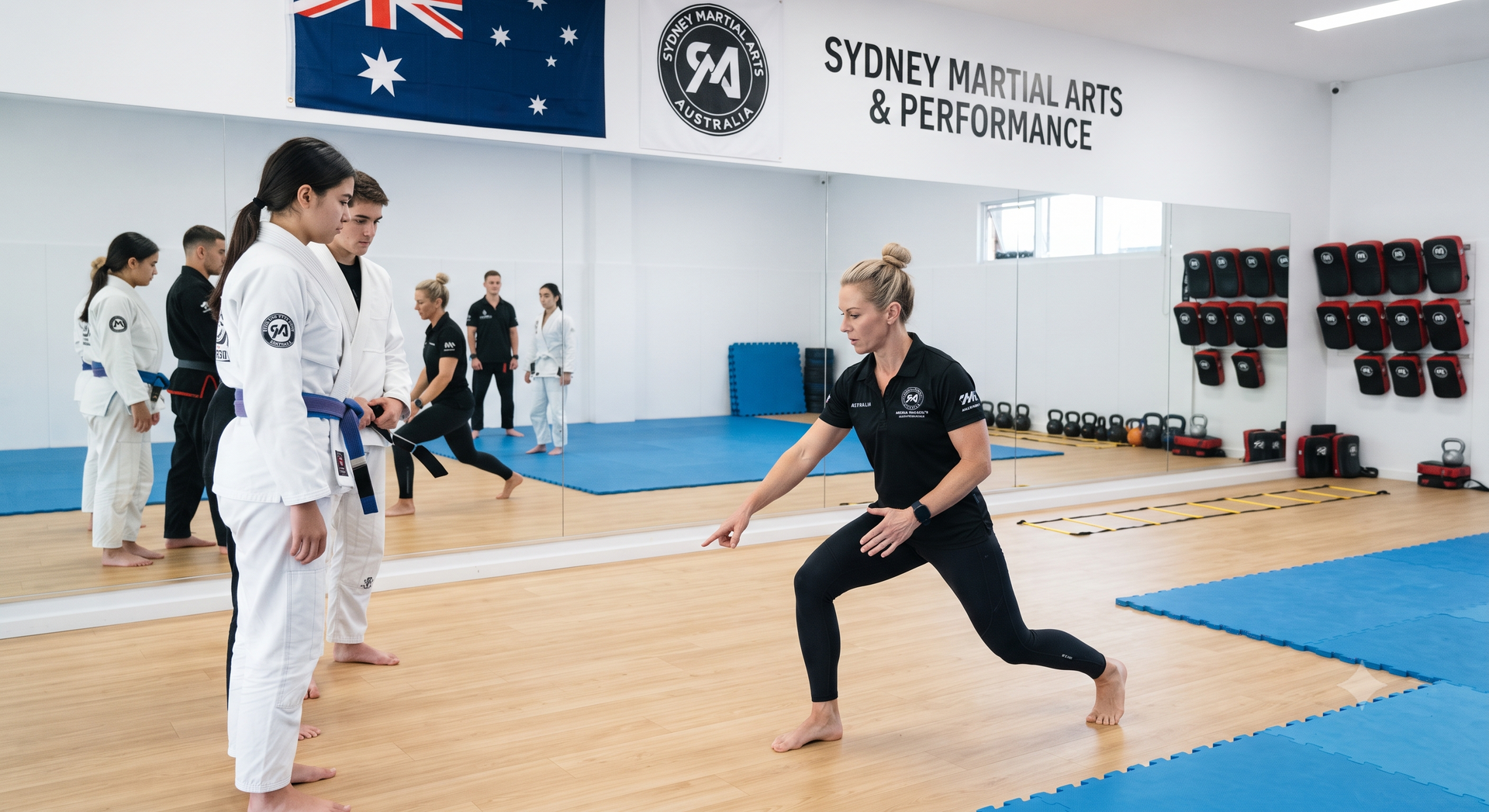
There is a fundamental difference between a martial arts instructor who teaches the way they were taught, and one who understands why certain teaching approaches produce faster, more lasting results than others. That understanding comes from sports science — the study of how the human body and mind actually acquire physical skill, how training load should be structured to promote adaptation without causing injury, and how motivation and feedback interact to determine whether a student continues or gives up.
Most martial arts instructors have never formally studied sports science. They've absorbed what worked for them personally and replicated it. This approach produces competent instructors. AMACS courses produce exceptional ones.
What Sports Science Content Is Built Into AMACS Level 1
AMACS Level 1 includes formal sports science content specifically applied to the martial arts context. This isn't generic exercise science theory — it's the practical application of how learning works, how to structure a class to maximise skill acquisition, how to sequence instruction so that students retain what they've learned, and how to adapt your teaching to different learning styles and abilities within the same class.
For instructors who have never formally studied this material, the Level 1 content produces an almost immediate shift in how they see their classes. They start noticing things they were previously blind to: which parts of their teaching approach are working well and why, which aren't, and what specific changes would produce better outcomes for students.
Why This Makes You Better at Retaining Students
Students don't leave a martial arts school because the style isn't good enough. They leave when they stop feeling like they're progressing. Instructors who understand the learning process — who can see when a student has hit a plateau and why, and who know how to intervene with the right cue at the right time — retain students at significantly higher rates than those who don't.
This directly affects your school's revenue, your community, and your ability to grow. And it's a skill set you can start building right now, through AMACS Level 1, at courses.martialartsuniversities.com.
The course is available from just US$199 and can be completed in your own time from anywhere. Most instructors find the sports science content alone worth considerably more than the enrolment cost.
How Skill Acquisition Actually Works
One of the most immediately useful concepts covered in Level 1's sports science units is the distinction between the cognitive, associative, and autonomous stages of motor skill learning. A beginner learning a new technique is in the cognitive stage — thinking through each component step by step, and needing clear, simple cues rather than a flood of correction. An intermediate student in the associative stage is refining and linking movements together, and benefits from more nuanced feedback about timing and efficiency. An advanced student in the autonomous stage has largely automated the movement and is now working on subtlety, adaptability, and application under pressure.
Instructors who understand which stage a given student is in stop giving cognitive-stage students the kind of complex feedback that overwhelms them, and stop giving autonomous-stage students the kind of basic correction that bores or frustrates them. This single distinction, applied consistently, measurably improves both the pace of student progress and the quality of the training relationship.
Feedback, Motivation, and the Plateau Problem
Every martial arts student eventually hits a plateau — a period where visible progress slows even though effort remains consistent. How an instructor responds to this moment is one of the clearest markers of sports science literacy in practice. An instructor without this training tends to either ignore the plateau, assuming the student will push through, or pile on generic encouragement that doesn't address the actual cause. An instructor with genuine sports science grounding can identify whether the plateau reflects a specific technical limitation, an under-recovered physical state, or a motivational dip — and can respond with the specific intervention each of these actually requires.
This is precisely the kind of practical, high-leverage knowledge Level 1 is designed to build, and it is the difference between an instructor who loses students at the plateau and one who guides them through it.
Applying Sports Science to Different Age Groups
A further strength of the Level 1 sports science content is that it does not treat all students as though they learn in the same way regardless of age. Children acquire motor skills differently to adults, respond to different kinds of feedback, and have different attention spans and motivational drivers. Instructors who understand these differences design meaningfully different sessions for a junior class and an adult class, rather than simply running a scaled-down version of adult content for children. This single piece of applied sports science knowledge is one of the most immediately practical takeaways for instructors who teach across a mixed-age student base, which describes the great majority of Australian martial arts schools.
From Individual Improvement to School-Wide Standard
When a school's entire instructor team has genuinely absorbed this sports science foundation, the benefit extends beyond any single class. Students moving between different instructors within the same school experience a more consistent quality of teaching, because every instructor is drawing on the same evidence-based understanding of how people learn physical skill, rather than each instructor relying purely on their own individual teaching intuition. This consistency is one of the most valuable, if under-appreciated, outcomes of investing in sports science training across a whole instructor team rather than for a single head instructor alone.
Turning Theory Into Habit
The real test of any sports science course is not what an instructor can recite afterward but what they actually do differently in their next class. Level 1 is deliberately structured so that its concepts are tied directly to practical class scenarios rather than left as abstract theory, which is why instructors who complete it tend to report changes in their teaching almost immediately, rather than needing to translate academic content into practice over months. This immediacy is part of what makes the course genuinely worth the modest time and cost investment for instructors at any stage of their teaching career.
A Competitive Advantage That's Still Rare in This Industry
Because so few martial arts instructors have formally studied sports science, the instructors and schools that do genuinely stand apart in a crowded local market. Parents comparing schools rarely have the vocabulary to describe what they're noticing, but they do notice the difference — classes that feel purposefully structured, corrections that are clear and specific rather than vague, and a visible sense that the instructor genuinely understands how their child is progressing and why. This is precisely the reputation that sports science literacy, learned through AMACS Level 1, helps build over time.
Sports Science Pays for Itself Quickly
Considered purely in business terms, the cost of Level 1 is modest against the value of even a single retained student who would otherwise have quietly stopped attending after hitting an unaddressed plateau. Instructors who apply the sports science content consistently tend to find that improved retention alone repays the enrolment cost many times over within the first few months, well before accounting for the broader professional credibility the qualification also provides.
Where to Begin
If you have never formally studied how people learn physical skill, Level 1 is the single most efficient place to begin closing that gap, regardless of how many years you have already spent teaching. The content is designed to be immediately applicable from your very next class, not held in reserve for some future point in your career.
How This Content Was Developed
The sports science material in AMACS Level 1 was developed in consultation with genuine sports science professionals, rather than being written purely from the accumulated anecdotal experience of veteran instructors alone. This distinction matters because anecdote-based teaching wisdom, however well-intentioned, sometimes carries assumptions that don't hold up against the actual evidence on how people acquire motor skill. Grounding the course content in genuine sports science research means instructors are learning approaches that are actually supported by evidence, not simply approaches that feel intuitively correct because that's how the instructor themselves was once taught.
From Individual Class to Whole-School Philosophy
Instructors who apply the sports science principles from Level 1 consistently, over time, in their own classes, often become quiet advocates for the same approach across their whole school — influencing how other instructors think about programming and student progress even without formally teaching them the material. This organic spread of better teaching practice, starting from a single instructor's Level 1 completion, is one of the more understated but genuinely valuable ripple effects of investing in this training — and it is a large part of why school owners often choose to enrol their entire team rather than a single instructor alone, so that the improved standard becomes a genuine school-wide culture rather than the practice of one particularly conscientious individual.
Share
Teaching Self-Defence Professionally: The Course Built for Instructors Who Work With Real-World Risk