Are You Ready for a Medical Emergency in Your Class? AMACS Level 2 Covers This
Why Emergency Coordination Is a Required Skill for Every Instructor
At some point in every martial arts instructor's career, something happens in class that goes beyond a bruised shin or a strained muscle. A student loses consciousness. Someone has a cardiac event. A severe allergic reaction. A serious injury that requires professional emergency response. In that moment, the quality of what you do in the first few minutes matters enormously — and most instructors have never formally prepared for it.
AMACS Level 2 specifically includes a unit on coordinating and monitoring participant response to emergency situations. It's one of the most important units in the entire AMACS curriculum, and it's a significant part of why Level 2 is not optional for instructors who are serious about their professional responsibilities.
What the Emergency Coordination Unit Covers
This unit develops your capacity to prepare for and respond to genuine emergencies in a training environment — not just basic first aid (though first aid is the minimum requirement for any instructor), but the organisational and communication skills to coordinate an appropriate response when something serious happens. Understanding who does what, how to communicate clearly with emergency services, how to support other students in the class while managing a crisis, and what documentation needs to follow are all part of being prepared rather than just hoping it never happens.
The reality is that martial arts training does carry physical risk, and instructors who have never thought through their emergency response processes are carrying a gap they probably don't think about until they need it.
Student Welfare Is Core to Your Professional Identity
The student welfare content in Level 2 goes well beyond emergency response. It covers how to identify when a student is struggling — physically, emotionally, or in terms of their relationship with the training — and how to respond in a way that is helpful, professional, and appropriate to your role. Understanding the limits of your role as an instructor, and knowing when to refer a student to appropriate professional support, is a skill that takes deliberate development.
These aren't soft skills. They're professional competencies that define the difference between an instructor who teaches technique and one who genuinely develops students as people.
Coordinating a Response When You Are Not Alone in the Room
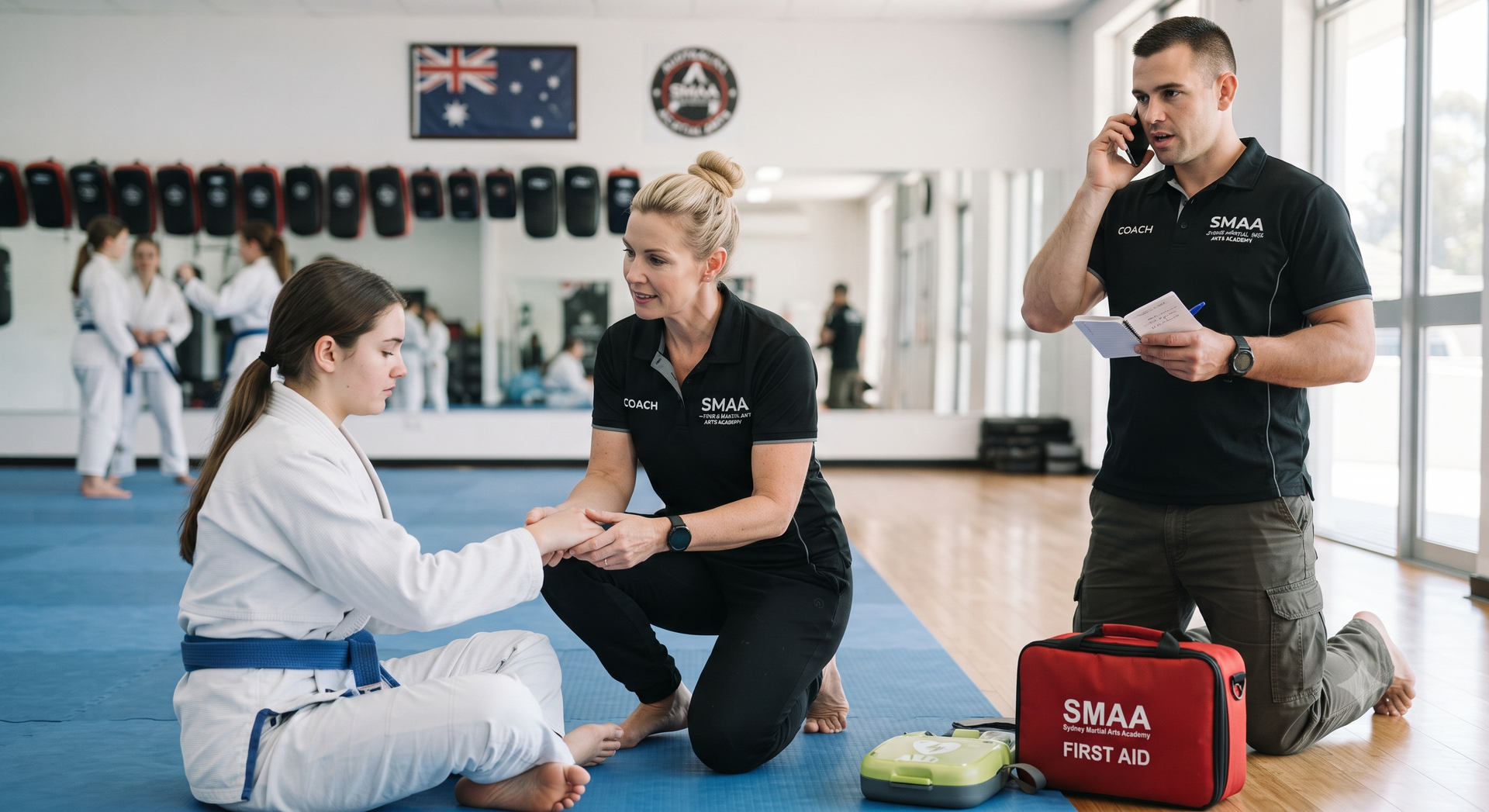
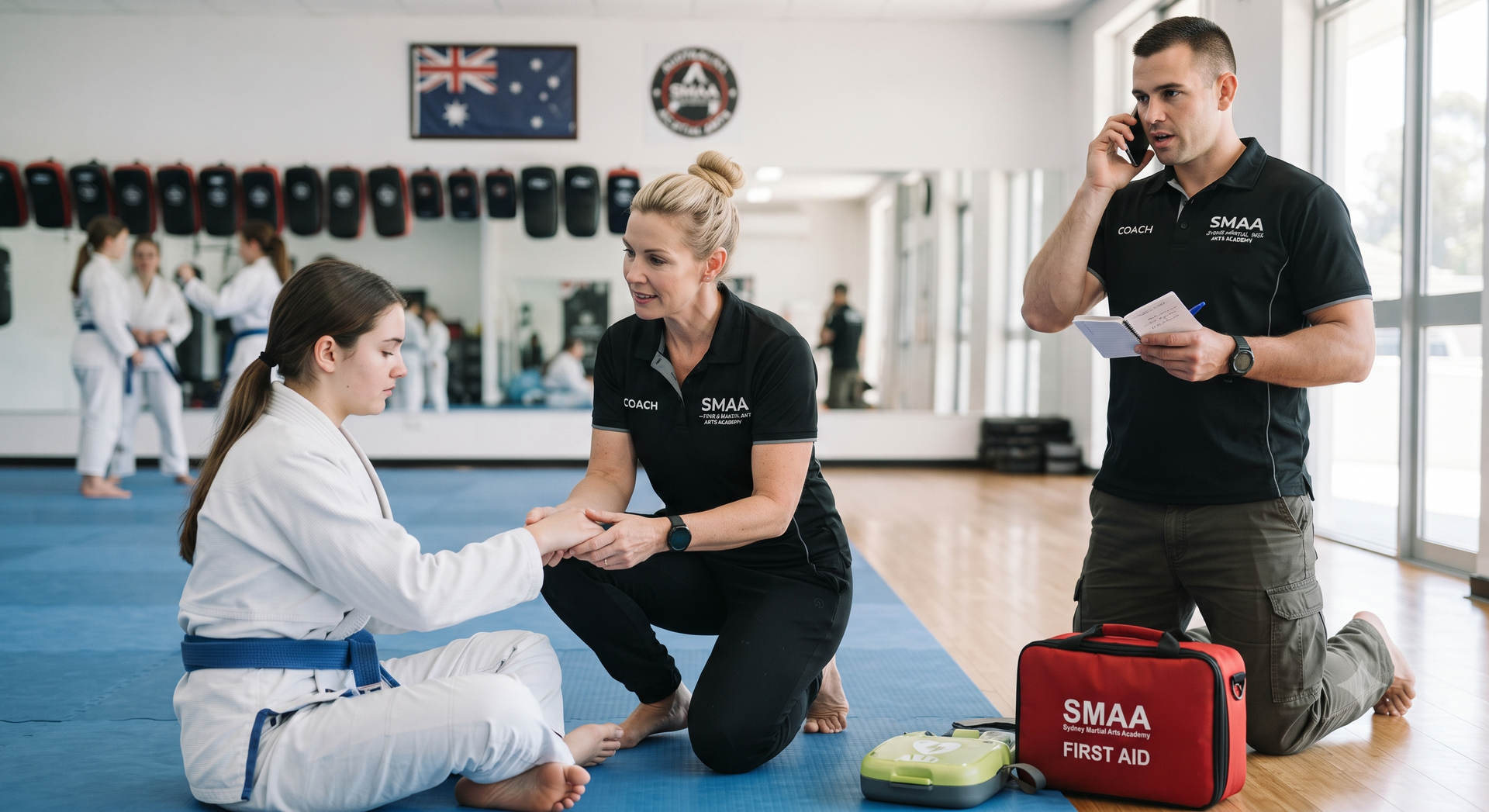
A genuine emergency rarely involves just the injured student and a single instructor. A real class has other students present, sometimes parents on the sidelines, and often more than one staff member on the floor. Level 2's coordination content specifically addresses how to allocate roles in this situation — who administers first aid, who calls emergency services and relays clear, accurate information, who manages the rest of the class so they are neither frightened nor left unsupervised, and who greets and directs paramedics when they arrive. Without this kind of pre-thought-through coordination, even instructors who individually know first aid can end up working at cross purposes in the actual moment of crisis, simply because nobody had assigned roles in advance.
The Documentation Habit That Protects Everyone
Beyond the immediate response, Level 2 emphasises the discipline of documenting an incident properly and promptly — what happened, what was observed, what actions were taken, and who was involved as a witness. This is not simply an administrative formality. Clear, contemporaneous documentation protects the injured student, protects the instructor, and protects the school if the incident is ever reviewed later, whether by a concerned parent, an insurer, or in the rare case a legal question arises. Instructors who have never been taught to do this properly tend to either document nothing or document informally in a way that is far less useful than a structured, factual incident report completed the same day.
Why This Content Belongs in Every Instructor's Training
It is tempting to think of emergency preparedness as something only relevant to instructors running high-contact combat sports classes. In reality, medical emergencies unrelated to the specific style being taught — a cardiac event, a severe allergic reaction, a diabetic episode — can occur in any class, at any intensity, involving any student. This is precisely why Level 2 treats emergency coordination as core, universal instructor training rather than a specialised add-on relevant only to certain styles or certain class types.
Practising the Response, Not Just Learning It
Knowledge of an emergency response process only becomes genuinely useful when it has been rehearsed, even briefly, rather than simply read once and filed away. Schools that get the most value from Level 2's emergency coordination content tend to run a short, informal walkthrough with their instructor team afterward — who would do what, where the first aid kit and emergency contact details are kept, and how the specific layout of their own training space affects the response. This turns course content into a genuinely actionable plan specific to that school, rather than leaving it as general knowledge that has to be improvised into a specific plan only in the moment it is actually needed.
Why Insurers and Parents Both Notice This Preparation
A school that can demonstrate a genuine, documented emergency response process — developed through structured training like Level 2 rather than assumed informally — is in a stronger position with its own insurer if an incident is ever reviewed, and is also a school that parents feel genuinely safer entrusting their children to, once this preparation is communicated clearly. This is one of the clearest examples in the whole AMACS suite of a course benefit that serves student safety, family confidence, and business risk management simultaneously.
A Skill Every Instructor Keeps for Their Whole Career
Unlike some coaching skills that are specific to a particular age group or class format, emergency coordination competence is relevant across every context an instructor will ever teach in — a beginner's class, an advanced competitive squad, a seniors program, or a corporate self-defence workshop. Instructors who build this capability early in their teaching career carry it forward indefinitely, and many describe it as one of the few pieces of formal training that feels immediately and permanently relevant regardless of how their teaching career subsequently develops.
Getting Started Today
There is no waiting list, no intake date, and no need to coordinate with anyone else at your school before you begin. You can create an account at the course portal, pay the enrolment fee, and start working through the first unit within minutes of deciding to do it. For an instructor who has been meaning to formalise their teaching for a while but has kept putting it off, removing every practical barrier to starting is precisely the point of how AMACS has built its enrolment process.
What Parents Are Trusting You With
When a parent leaves their child in your class, they are implicitly trusting that you have thought through what happens in a worst-case scenario, even though almost none of them would ever ask you directly whether you have a formal emergency plan. Being able to answer that unasked question honestly and confidently — because you have genuinely trained for it through content like Level 2's emergency coordination unit — is part of honouring the trust every parent extends the moment they hand their child over to your class.
Building This Into Your School's Standard Operating Procedure
The most effective schools do not treat emergency preparedness as a one-off training exercise completed once and forgotten. They build it into standard operating procedure — reviewed periodically with the whole instructor team, updated whenever the training space or equipment changes, and revisited whenever a new instructor joins. Level 2 gives you the foundation; embedding it into ongoing practice is what keeps that foundation genuinely current and useful.
When a Class Includes Students With Existing Health Conditions
Emergency preparedness becomes considerably more relevant, not less, when your class includes students with known health conditions — asthma, diabetes, severe allergies, or a cardiac history. Level 2's content encourages instructors to build simple, specific awareness of these conditions among their student base into their emergency planning, so that a response to a specific known student's specific condition can be faster and more informed than a generic response to an unknown medical event. This kind of specific preparation, built quietly and respectfully into how a school operates, reflects exactly the kind of genuine professional care that Level 2 is designed to instill.
The Difference Between Knowing First Aid and Being Prepared
Many instructors already hold a current first aid certificate and reasonably assume this alone constitutes adequate emergency preparation. Level 2's content makes an important distinction: first aid teaches you what to do to one injured person in isolation. Emergency coordination teaches you how to manage that same situation within the context of a full class, other students, worried parents, and the practical logistics of getting emergency services onto the scene efficiently. Both skills matter, and holding only the first without the second leaves a genuine gap in an instructor's actual readiness.
Share
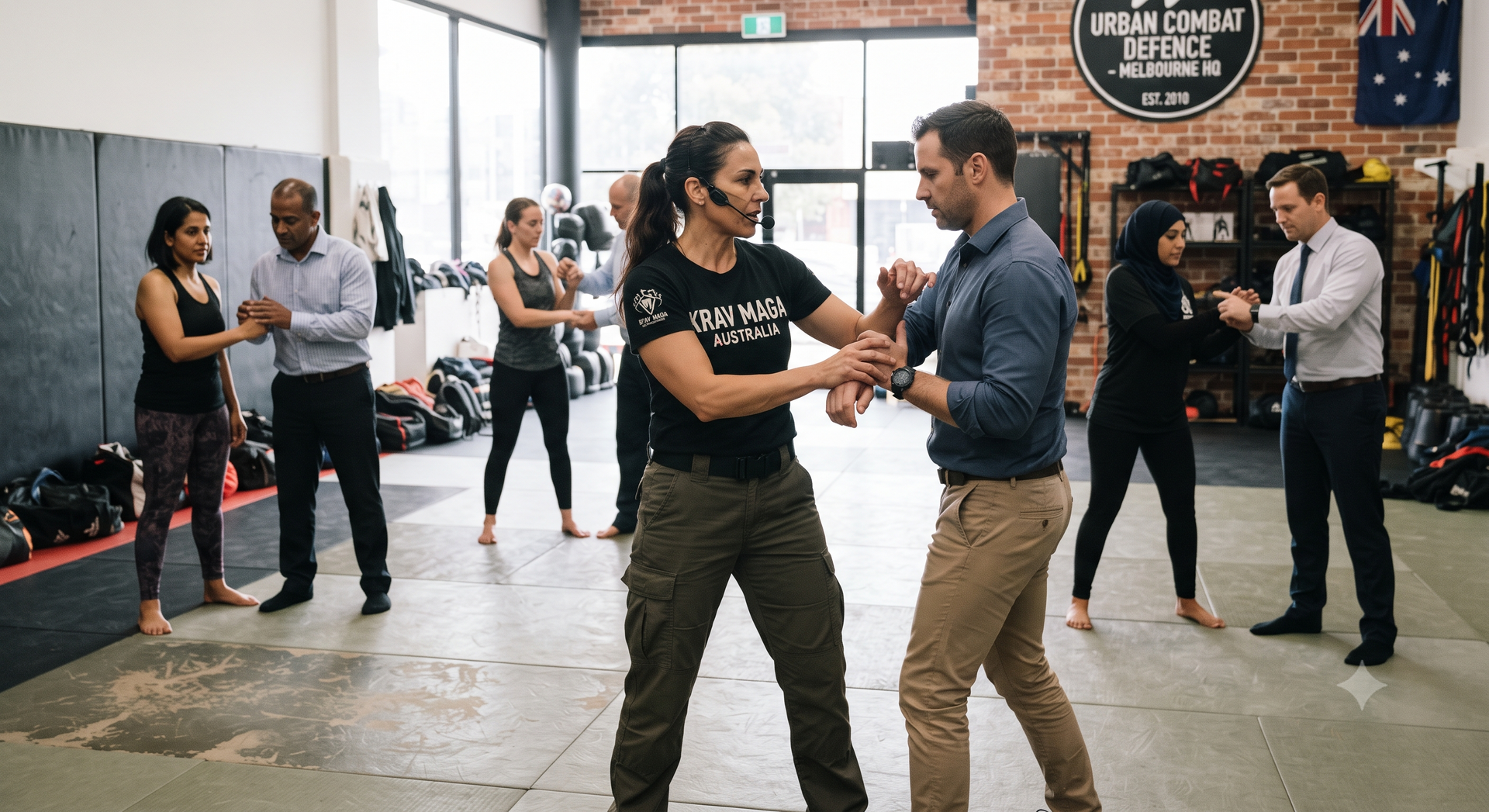
Teaching Self-Defence Professionally: The Course Built for Instructors Who Work With Real-World Risk