The Science Behind Great Martial Arts Coaching: What the Research Actually Says
Separate tradition from evidence and uncover the coaching practices supported by modern sports and education research.

Most martial arts instructors teach the way they were taught. That's natural — we learn by example, and if you had a great coach, you absorbed their methods without necessarily understanding the science behind why they worked.
But coaching science has advanced significantly over the past two decades, and understanding what the research actually says about learning, skill acquisition, and performance development can transform how you coach your students.
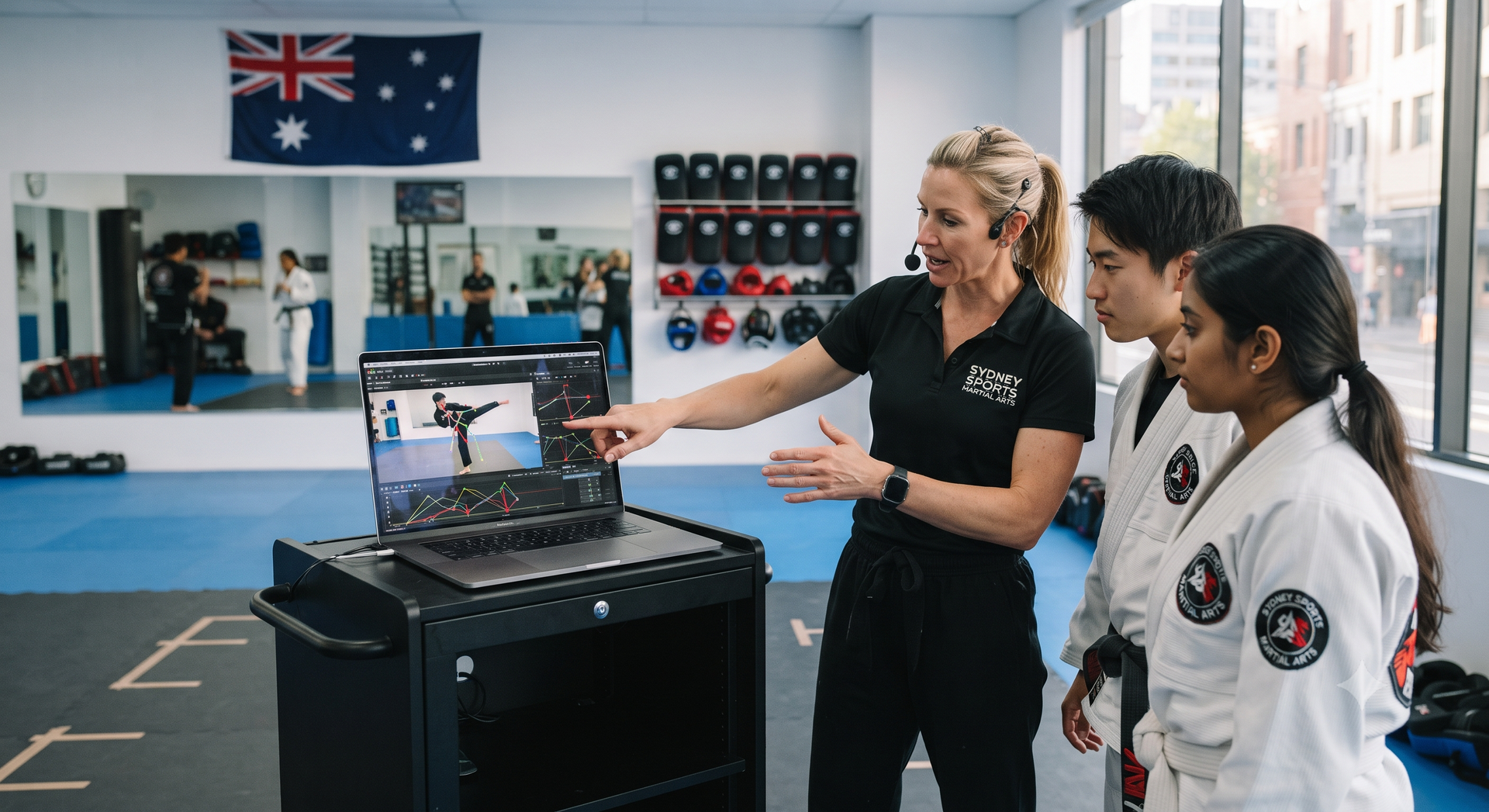
At AMACS Australia, sports science is a core component of our instructor courses — not as abstract theory, but as directly applicable knowledge that changes how you structure sessions, give feedback, and think about student progress. This article shares some of that knowledge with you.
How Motor Skills Are Actually Learned
The traditional martial arts approach to skill development relies heavily on repetition — drilling a technique until it becomes automatic. This intuition is broadly correct, but the research reveals important nuances that most instructors miss.
According to motor learning theory, skills pass through three stages: the cognitive stage, where the learner is consciously thinking through every step of the movement; the associative stage, where the movement is becoming more automatic but still requires deliberate attention; and the autonomous stage, where the movement happens without conscious thought.
The training approach that works best is different at each stage. In the cognitive stage, students benefit from clear, simple verbal instructions and immediate feedback. In the associative stage, they benefit from varied practice and reduced feedback frequency — too much feedback at this stage actually slows learning by preventing the student from developing their own internal error-detection. At the autonomous stage, adding complexity and pressure accelerates further development.
Practical application: when you're teaching a new technique, your job is to get students to the associative stage as quickly as possible by reducing cognitive load (break the technique into smaller components, use visual demonstration more than verbal explanation). Once they're there, resist the urge to constantly correct — let them practice, fail, and self-correct.
The Problem With Blocked Practice
The standard format for martial arts drilling is blocked practice — you drill technique A until it's good, then drill technique B, then technique C. This feels efficient because students show obvious improvement within each drilling block.
But research consistently shows that interleaved practice — mixing techniques within a session rather than drilling one at a time — produces superior long-term retention even though it feels harder and produces less visible improvement in the short term.
The reason is that interleaving forces the brain to retrieve and reconstruct the technique each time, rather than just continuing an active motor pattern. That retrieval process is what builds durable skill.
Practical application: once students have a basic grasp of a technique, mix it with other techniques in your drilling sequences. The session will feel messier, but the long-term skill development will be significantly better.
Feedback Timing and Frequency
Most instructors give feedback immediately after every repetition. The research suggests this is actually counterproductive past the early learning stage.
Immediate, frequent feedback creates feedback dependency — students perform well when you're there correcting them but struggle to maintain quality independently. Studies in motor learning show that summary feedback (given after a block of repetitions) and delayed feedback (given several seconds after the final repetition) produce better long-term retention than immediate feedback.
The principle is the same as the interleaving research: if students have a moment to form their own assessment before you give yours, they're actively developing their own error-detection and self-correction skills. Those internal skills are what actually allow them to improve when they train alone.
Practical application: watch a student complete a drill, pause, ask them "how did that feel?" before giving your own feedback. You'll often find they've already identified the error — which means your job becomes confirming their analysis rather than providing it.
Psychological Safety and Learning Readiness
Neuroscience research on learning consistently shows that the emotional state of the learner has a profound effect on skill acquisition. Students who feel psychologically safe — who don't fear embarrassment or harsh criticism — retain information better, attempt difficult techniques more readily, and recover faster from failure.
This has direct implications for how martial arts classes are structured, particularly for beginners. A class culture that makes mistakes seem shameful will suppress the natural experimentation that skill development requires. A class culture that normalises mistakes and treats failure as information creates faster learners.
This doesn't mean lowering standards. Elite sports performance environments consistently combine high expectations with high psychological safety — "I expect excellence from you, and I'm completely supportive while you develop it" is a more effective coaching stance than "I expect excellence and I'll let you know when you fall short."
Practical application: be deliberate about the language you use when correcting errors. "You're doing X wrong, do Y" is less effective than "Good attempt — what would happen if you shifted your weight forward at that point?" The second approach maintains the student's sense of competency while directing attention to the key learning point.
The Importance of Constraint-Led Approaches
Traditional martial arts teaching is often explicit — you tell students what to do, they practice doing it. Constraint-led approaches work differently: you design the practice environment so that the correct technique is the most natural solution, rather than directly instructing students to use it.
For example, instead of telling a student "keep your hands up," you might position a partner at a specific distance where a low guard is immediately and naturally penalised. The student discovers the value of the high guard through the constraint of the environment rather than through your instruction.
This approach is more cognitively demanding but produces better transfer of learning — the skill developed through constraint-led practice is more likely to appear in free sparring or competition because it was learned as a response to a real stimulus, not as a consciously rehearsed pattern.
Practical application: think about how you can modify practice tasks to make the correct technique the path of least resistance, rather than relying purely on instruction and correction.
Load Management and Injury Prevention
Sports science research on load management has transformed professional sport, but its principles are rarely applied systematically in martial arts schools.
Overuse injuries in martial arts are common and largely preventable. The body adapts to training loads over time, but it needs adequate recovery between sessions. Research shows that the ratio of training load this week compared to the average over the previous four weeks is a reliable predictor of injury risk — athletes with sudden spikes in training volume are dramatically more likely to be injured than those with progressive, well-managed increases.
For most martial arts school owners, this doesn't mean implementing complex monitoring systems. It means having a sensible periodisation approach: varying intensity across the week, not pushing beginners too hard too fast, and treating signs of fatigue and soreness as important information rather than obstacles to push through.
Practical application: build a weekly and monthly training calendar that deliberately varies load. Hard sessions should be followed by lighter recovery sessions. Grading periods and competition preparation should be built around progressive load increase, not sudden spikes.
Why This Matters for Your Qualification
These aren't just interesting concepts — they're practical coaching tools that produce measurably better student outcomes. Students who learn faster, retain more, and develop more robustly are happier students. Happy students stay longer, refer their friends, and make your club successful.
At AMACS, we teach these principles as part of our instructor courses because we believe that the martial arts industry deserves instructors who are as scientifically informed as coaches in any other sport. The days of "just copy what I do" as the complete instructor development model are behind us.
Our Level 1 course is the starting point for instructors who want to bring this kind of evidence-based approach to their coaching. Our Level 2 and 3 courses go deeper into session design, individual performance analysis, and advanced facilitation skills.
Enrol through our online portal at Martial Arts Universities and experience the difference that genuine coaching science makes to your practice.
Share
Teaching Self-Defence Professionally: The Course Built for Instructors Who Work With Real-World Risk