Opening Your Own Martial Arts Club: A Step-by-Step Guide From Concept to First Class
A practical guide to launching a martial arts school with the right qualifications, systems, insurance, and growth strategy from day one.

Opening a martial arts club is one of the most rewarding things you can do as a martial artist. You get to share what you love, build a community, make your community safer, and create a livelihood from your passion.
It's also one of the easiest things to rush into without adequate preparation — and that's where many clubs fail in their first two years.
At AMACS Australia, we've supported hundreds of graduates through the process of starting their own clubs. We've seen what works and what doesn't. This guide pulls together the most important things you need to know before you open your doors — and what AMACS courses equip you to do.
Start With the Right Qualifications
Before anything else — before you book a venue, before you design a logo, before you start telling people you're opening — get your instructor qualification sorted.
This isn't just a legal formality. It shapes everything that follows. When you have a recognised qualification, your conversations with insurance brokers go more smoothly, your potential students and their parents take you more seriously, and you have a professional framework to build your program from rather than improvising from experience alone.
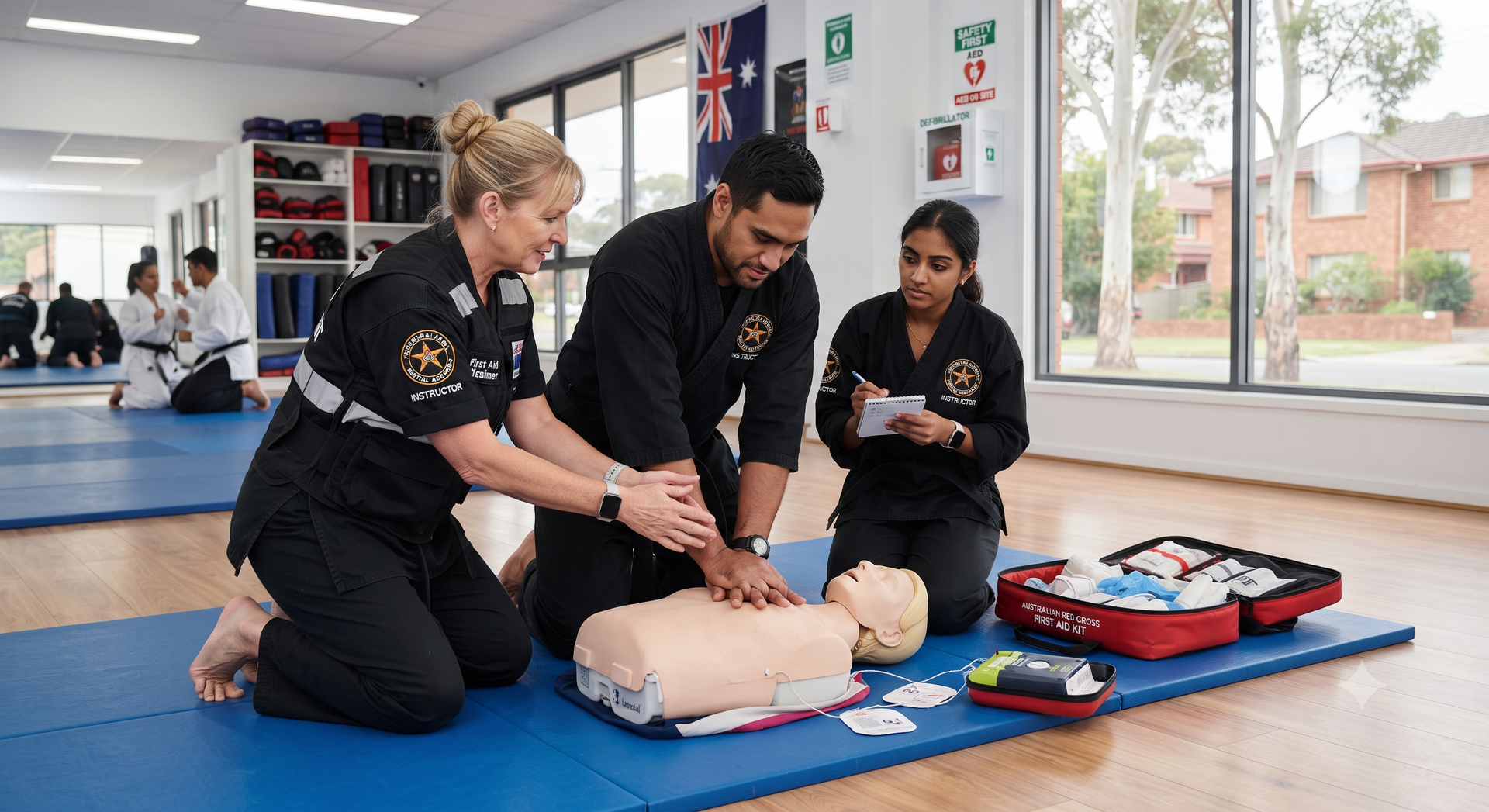
AMACS Level 1 is the minimum professional standard we recommend for anyone opening a club. It covers risk management, class planning, and session delivery — exactly the practical knowledge you need from day one. If you're bringing in assistant instructors, getting them enrolled simultaneously ensures you're building a professional team from the outset rather than patching gaps later.
You can complete AMACS Level 1 entirely online, at your own pace, starting from as little as US$199. The qualification is endorsed by Martial Arts Australia (MAA) and the International Martial Arts Coaching Council, which means it carries genuine industry credibility.
Choose Your Location Strategically
The single most common mistake new club owners make is choosing a location based primarily on affordability rather than suitability. Rent is important, but a cheap space in the wrong location will cost you more in lost potential students than a reasonable rent in the right place.
Think about your target demographic. Children's programs need visibility and accessibility to families — being near schools, childcare centres, or family-oriented shopping areas dramatically improves foot traffic and discoverability. Adult programs, particularly competitive or specialist programs, attract students who are more willing to travel.
Parking and public transport access matter more than most first-time club owners expect. A parent dropping off three children per week will choose the club with easy parking over the better-qualified instructor with a difficult parking situation more often than you'd like.
Also consider ceiling height — grappling arts in particular need appropriate clearance — and the accessibility of the space for people with mobility considerations.
Get Your Insurance Right Before Day One
This is non-negotiable. Operating a martial arts class without appropriate insurance is not just financially irresponsible — it's professionally indefensible.
Martial arts insurance needs to cover both public liability (what happens if a student is injured during class) and professional indemnity (protection if a student or parent claims your instruction caused harm). If you're also running a facility, you'll need property coverage as well.
Our affiliated providers — Martial Arts Australia Insurance Services and Gym Insurance Brokers — understand the specific needs of martial arts schools and can structure coverage that actually fits your situation. We strongly recommend speaking with them before you take a single student.
Note that holding an AMACS qualification is looked upon favourably by insurance providers because it demonstrates professional training. This can affect both your eligibility for coverage and your premium.
Design Your Curriculum Before You Start Teaching
A common mistake: experienced instructors assume they'll "just teach what they know" and figure out the curriculum as they go. This produces an inconsistent experience for students and makes it nearly impossible to scale.
A structured curriculum defines what students learn at each stage of their development, how long they spend at each level before progressing, what the assessment criteria for grading are, and how beginner classes are distinct from intermediate and advanced classes. This structure gives students a clear sense of progress and achievement, which is one of the primary factors in long-term retention.
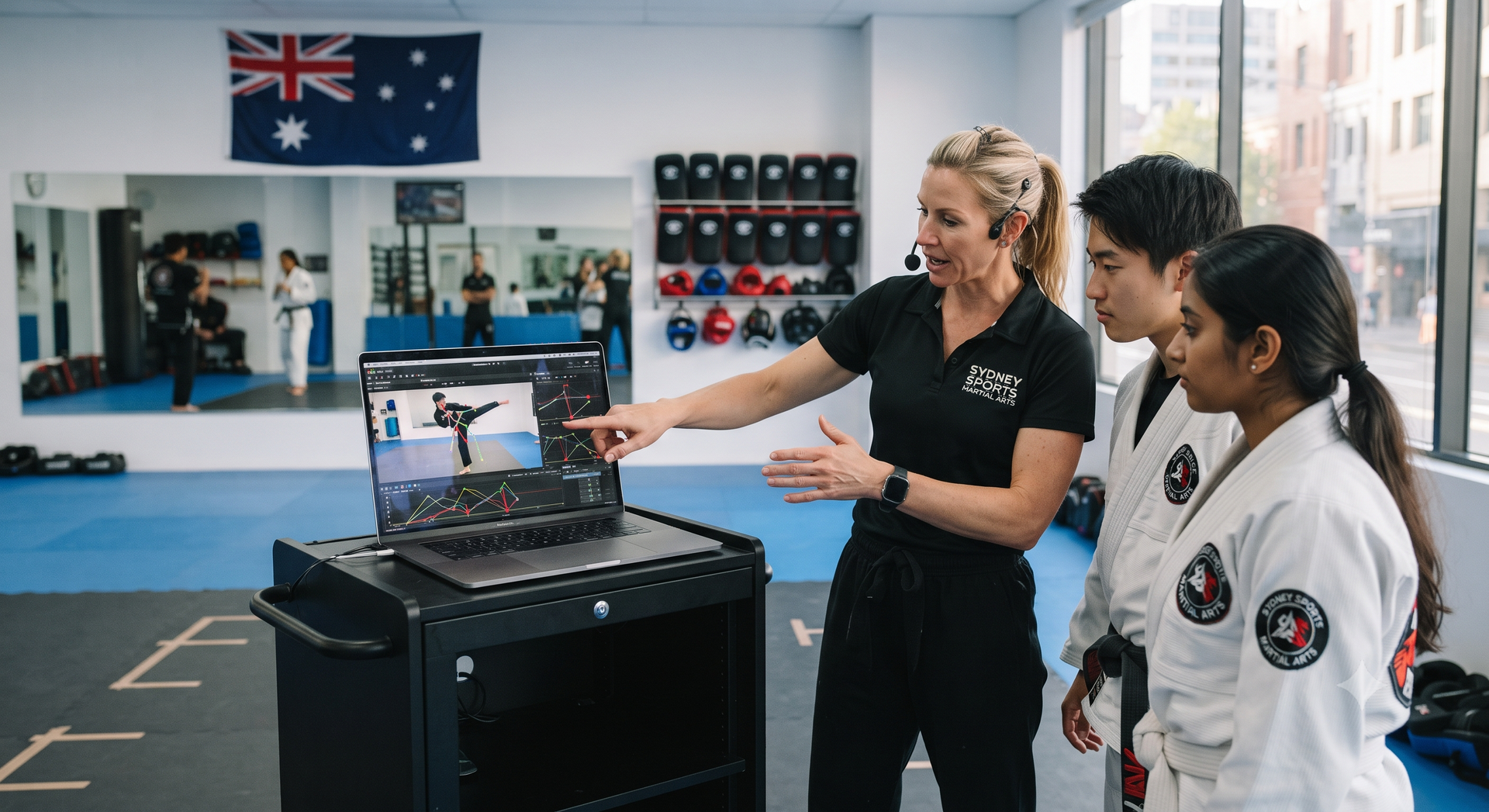
AMACS courses include components on curriculum design and class planning that give you the practical tools to build this out properly. The assessment component of our courses actually requires students to design and deliver a class plan — so by the time you graduate, you've already done the foundational work.
Build Your Business Infrastructure
Your club is a business. That means it needs the infrastructure that any business needs: a way to take payments, a way to communicate with students, a way to manage enrolments and attendance, and a way to market itself.
We work with several software and website partners through our Resources section that are specifically built for martial arts schools. Club Manager Software, for example, handles billing, attendance tracking, and student management in a single platform designed specifically for the martial arts context. Our partner Kapow Web Design builds websites for martial arts schools that are designed to convert visitors into enquiries.
Get these systems in place before you open, not after. Retrofitting business infrastructure onto an existing operation is painful and disruptive. Starting with solid systems means you can focus on teaching rather than administration.
Plan Your Launch Marketing
You can have the best classes in your city, and you'll still fail if nobody knows you exist.
Launch marketing for a new martial arts club typically includes a combination of physical presence (flyers at schools and community centres, a sign at your venue), digital presence (a website, Google Business Profile, Facebook page), and community engagement (introductory workshops, free trial classes, demonstration sessions at local events).
The mistake most new club owners make is doing one or two of these things half-heartedly rather than doing all of them systematically. A well-executed launch campaign over a six to eight week period before your opening date can fill your beginner classes before you open the door.
Our AMACS courses cover marketing as a core component, equipping you with the knowledge to promote your club professionally rather than just posting randomly and hoping people notice.
Your First 90 Days: What Success Looks Like
The first 90 days after opening are critical. This is when you set the culture of your club, establish your systems, and determine whether you have a sustainable business or not.
Focus on retention above all else in this period. Getting students in the door is one challenge — keeping them past the first month is where most new clubs struggle. Students who make it to 90 days are dramatically more likely to stay for years. Students who dropout in the first 30 days usually do so for preventable reasons: they didn't feel welcome, the class was too advanced, they didn't understand what was expected of them, or the instructor wasn't consistent.
All of these issues are addressed directly in AMACS instructor training. The professional skills you develop through your qualification are exactly what prevent first-month dropout.
Growing Beyond One Club
Once your first club is stable and profitable, the natural next step for many school owners is expansion — whether that's a second location, a satellite program, or branching into specialised programs.
This is where having AMACS-qualified instructors on your team becomes a genuine competitive advantage. Our Level 3 course is specifically designed for senior instructors who are ready to run branches, lead programs, and take on the kind of independent responsibility that expansion requires.
Many AMACS graduates have used our qualification pathway to systematically build multi-location operations that started with a single instructor in a single room. The pathway from enthusiastic practitioner to professional school operator is well-mapped — it starts with the right qualification and builds from there.
Visit our courses page to find out more about AMACS Levels 1, 2, and 3, or enrol directly through the Martial Arts Universities portal.
Share
Teaching Self-Defence Professionally: The Course Built for Instructors Who Work With Real-World Risk