Recognition of Prior Learning in Martial Arts: How to Get Your Experience Officially Recognised
Why Risk Management Is the Most Important Skill a Martial Arts Instructor Can Have
Ask a martial arts instructor what the most important skill they bring to the mat is, and you'll almost always get an answer about technique — their understanding of the art, their ability to break down complex movements, their experience in competition or combat.
Rarely does anyone say risk management.
But from a professional and legal standpoint, risk management is arguably the most critical competency a martial arts instructor needs. It's the skill that protects your students, protects your business, and protects you — and it's a skill that most instructors have never been formally trained in.
At AMACS Australia, risk management is a foundational component of all our instructor courses. This article explains why it matters so much and what proper risk management training actually involves.
What Risk Management Means in a Martial Arts Context
Risk management in a martial arts context isn't about refusing to do anything that involves physical contact. That would defeat the purpose of training. It's about systematically identifying the hazards present in your training environment and implementing measures that reduce the likelihood and severity of harm.
In practical terms, this means understanding the difference between inherent risk (the risk that exists in any martial arts training, which participants accept when they enrol) and negligent risk (additional risk created by instructor negligence, inadequate facilities, or inappropriate training practices).
You cannot eliminate inherent risk from martial arts. Injuries happen. But you can eliminate negligent risk — and the difference between the two has enormous legal and ethical implications.
An instructor who hasn't been trained in risk management often genuinely believes they're doing the right thing because they care about their students' safety. Caring isn't enough. Systematically assessing hazards, implementing controls, documenting procedures, and managing incidents appropriately requires specific knowledge and skills that have to be learned.
The Legal Landscape for Martial Arts Instructors
In Australia, the legal framework around duty of care in recreational and sporting activities has evolved significantly over the past decade. Instructors and school owners have a clear duty of care to the people who train under them — a duty that requires them to take reasonable steps to prevent foreseeable harm.
What constitutes "reasonable steps" is partly determined by professional standards in the industry. An instructor who holds a recognised qualification and follows established risk management protocols is in a much stronger legal position than one who doesn't — because the existence of those protocols demonstrates that they took their duty of care seriously.
Conversely, if an instructor without formal training is involved in a serious incident, the absence of documented risk management practices can be used to argue that they fell below the standard of care expected of a professional martial arts instructor.
This isn't a theoretical concern. Injuries resulting in litigation are not uncommon in contact sports, and the martial arts industry is not immune. The question for any instructor or school owner is whether they want to face that situation with or without documented evidence of professional conduct.
Hazard Identification in Training Environments
The first component of formal risk management is hazard identification — systematically examining your training environment to identify everything that could potentially cause harm.
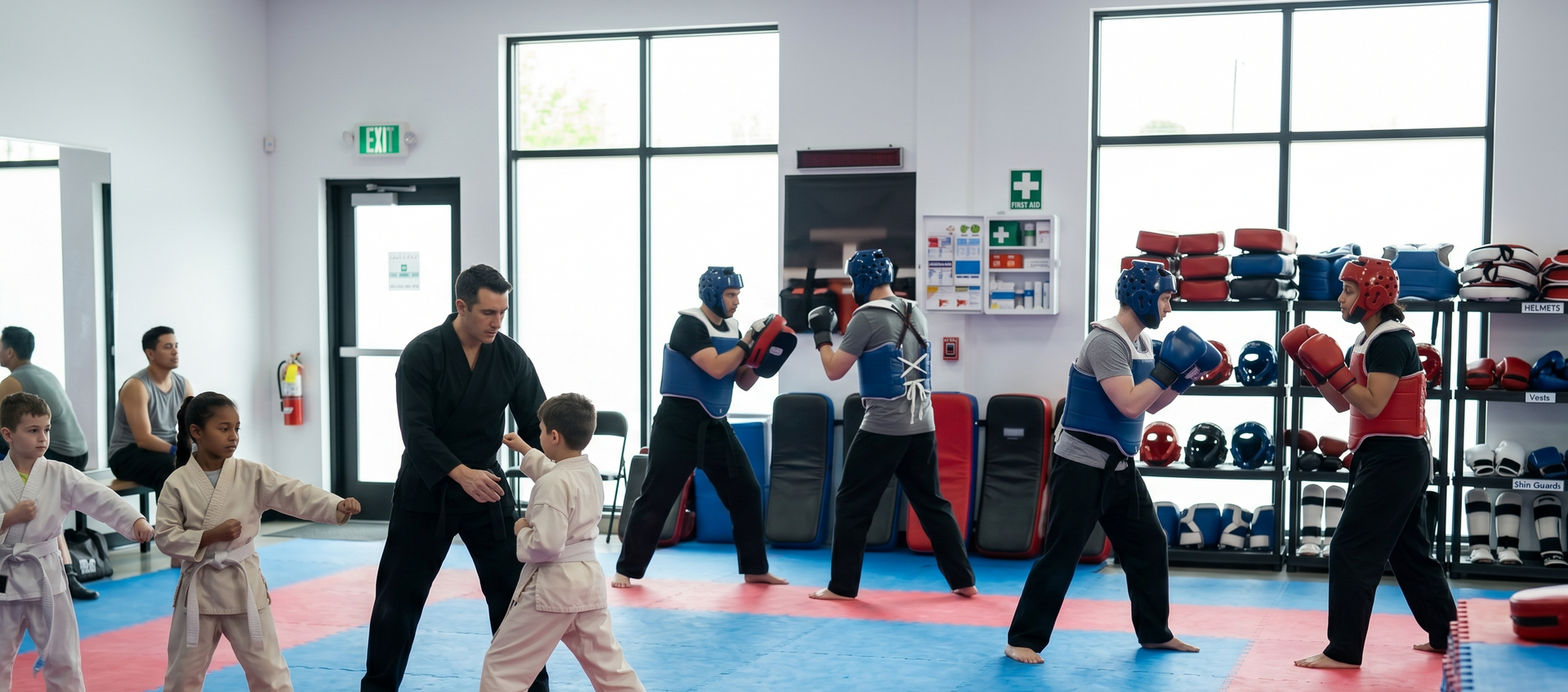
In a martial arts school, this includes physical environment hazards (floor surface and grip, matting condition and coverage, equipment storage near training areas, temperature and ventilation, emergency exits and first aid access), training activity hazards (contact levels in sparring sessions, appropriateness of training intensity for skill level, partner matching, use of protective equipment), and organisational hazards (instructor-to-student ratios, screening of new students for existing injuries, policies around training while unwell or injured).
A formally trained instructor approaches this systematically rather than intuitively. They conduct regular hazard assessments, document what they find, and maintain records of the controls they've implemented. This documentation is valuable both as a guide to consistent safe practice and as evidence of professional conduct if something goes wrong.
Risk Assessment and Control Hierarchies
Once hazards are identified, they need to be assessed — how likely is this hazard to cause harm, and how severe would that harm be? This assessment determines the priority for control implementation.
A recognised risk management framework uses a hierarchy of controls, from elimination (remove the hazard entirely) through substitution (replace with something less hazardous), engineering controls (physical modifications to the environment), administrative controls (policies and procedures), and finally personal protective equipment (the last line of defence, not the first).
Applied to a martial arts context: if heavy bag work is creating a hazard because students are sharing equipment in a way that leads to bunching and collision risk, elimination is probably not appropriate (heavy bag work is valuable training). You might address this through engineering controls (spacing bags further apart), administrative controls (staggering the use of equipment across the session), and finally personal protective equipment (appropriate gloves and padding).
This hierarchical thinking is what distinguishes a professionally trained instructor from one who just adds protective equipment when accidents start happening and hopes for the best.
Emergency Response Planning and Incident Management
Risk management also covers what happens when something does go wrong — and in martial arts, something will eventually go wrong regardless of how well-prepared you are.
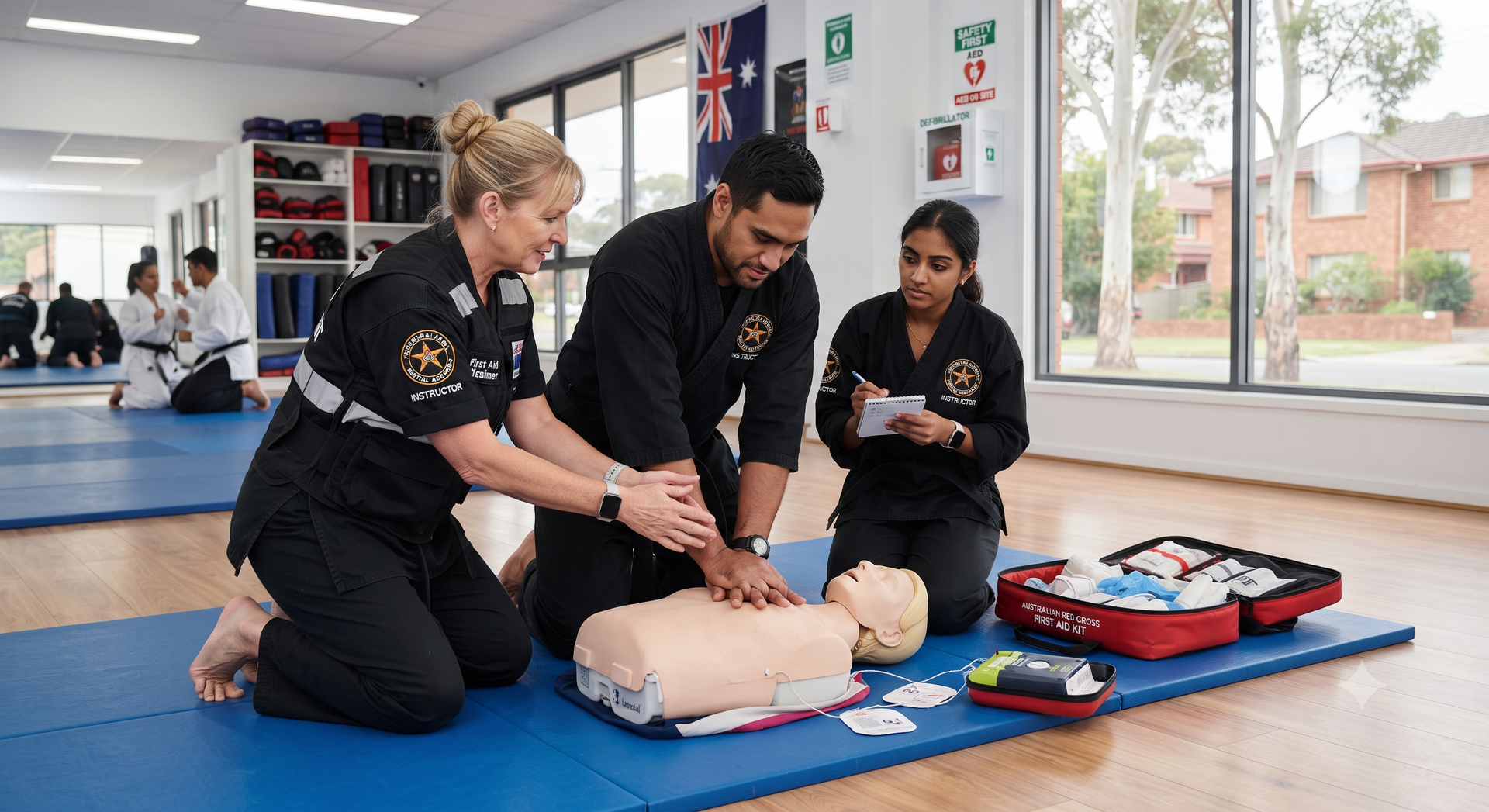
A professionally trained instructor has a clear emergency response plan: who contacts emergency services, where the first aid kit is and who is responsible for it, how training is paused and students are managed when a serious incident occurs, and how incidents are documented and reported.
Documentation of incidents is particularly important. If a student is injured in your class, having a formal incident record that captures what happened, how it was managed, and what changes were made to prevent recurrence is both a legal requirement and a demonstration of professional conduct.
AMACS Level 2 covers emergency preparedness and incident management in depth, including scenario-based learning that prepares instructors to make good decisions under pressure — because that's when good decision-making matters most.
Risk Management for Specific Populations
Different training populations require different risk management approaches, and this is an area where many instructors lack specific knowledge.
Children's programs carry different risks than adult programs. Children are still developing physically and cognitively, which means both the types of injury they're vulnerable to and the kinds of instruction that are appropriate differ from adult training. Contact levels, training intensities, equipment sizing, and supervision ratios all need to be adjusted.
Adults with pre-existing conditions — injuries, cardiovascular issues, musculoskeletal problems — require careful intake screening and ongoing management. An instructor who isn't trained to screen for these factors may inadvertently put students at significant risk.
Intermixed ability groups, which are common in martial arts schools with limited class options, require careful management to ensure that beginners aren't exposed to risks they're not prepared for when training with more experienced students.
All of these population-specific risk considerations are covered in AMACS training, giving you the knowledge to manage a diverse student base safely and professionally.
Protecting Your Insurance Coverage
Most martial arts instructors assume that having insurance means they're protected. But insurance policies contain conditions — things you must do in order for coverage to apply in the event of a claim.
Operating professionally and following recognised risk management practices is often one of those conditions. If you're found to have been negligent in your risk management and a student is injured, your insurer may dispute coverage entirely.
Having a formal risk management qualification and documented risk management practices is the most direct way to ensure that your coverage is genuinely there when you need it. Our affiliated insurance providers — Martial Arts Australia Insurance Services, Martial Arts Insurance, and Gym Insurance Brokers — understand the value of AMACS qualifications in this context.
Enrol in an AMACS course today and give your practice, your students, and your business the professional protection they deserve.
Share
Teaching Self-Defence Professionally: The Course Built for Instructors Who Work With Real-World Risk