Professional Defensive Tactics: What the Research Says About Real-World Self-Defence
How to Take Your Martial Arts Club to the Next Level: Growth Strategies That Actually Work
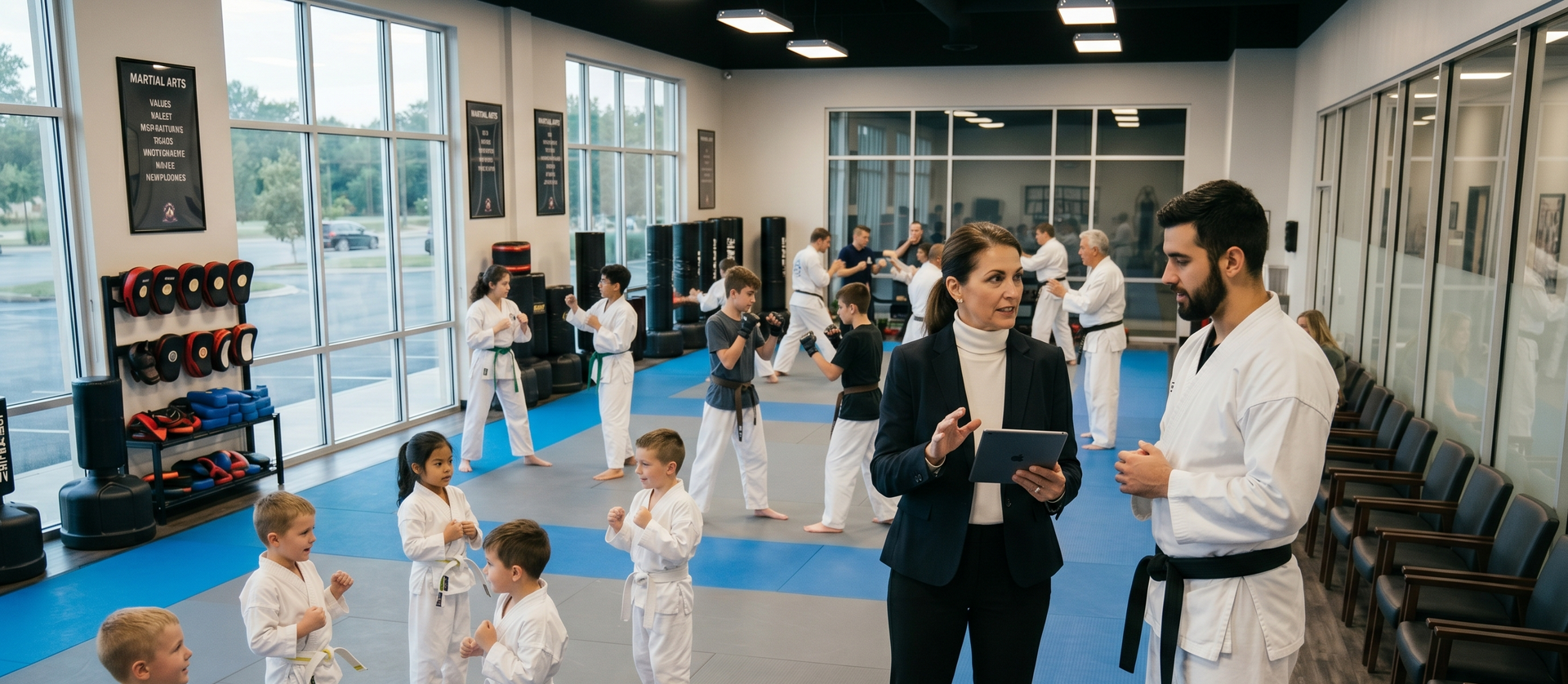
Every martial arts school owner wants to grow. More students, more programs, more community impact, a more sustainable business. But growth in a martial arts school doesn't happen the same way it happens in other businesses, and the strategies that work in other industries often don't translate.
After working with martial arts schools across Australia and internationally for over a decade, we've developed a clear picture of what actually drives sustainable growth in this context. This article shares the most important of those insights — and explains how AMACS qualifications and resources support each of them.
Understand Why Students Leave
Before you invest a single dollar in attracting new students, you need to understand why students are leaving. This sounds obvious, but most school owners focus almost entirely on acquisition and much less on retention analysis.
Dropout in martial arts schools typically clusters around a few common moments: the first 30 days (beginners who don't feel welcomed or progressed enough to feel invested), the three-to-six-month mark (students who've learned the basics and start to wonder whether this is really for them), and grading points (students who are nervous about testing or feel unprepared).
Each of these dropout clusters has specific, addressable causes. First-month dropout is primarily an onboarding problem — students aren't being integrated into the club community effectively. Three-to-six-month dropout is often a progression problem — students can't clearly see their own development. Grading dropout is an expectation management problem — students don't understand what grading involves until they're confronted with it.
An instructor development program that includes retention skills — which AMACS courses provide — directly addresses each of these dropout causes.
Build Programs, Not Just Classes
Many martial arts schools offer one thing: classes. Students come to class, they learn, they progress. That's it.
The schools that grow fastest tend to think in terms of programs rather than classes. A program has a defined audience, a clear outcome, a structured curriculum, and a specific price point. A children's program for beginners aged 5-7 is very different from a children's program for intermediate students aged 8-12 — and both are different from the adult fitness-focused program and the competitive training program.
Differentiated programs serve more of your potential market, command better retention (because students are in a program designed specifically for them rather than a generic class), and often command better pricing.
Building programs requires the curriculum design skills that AMACS Level 1 and 2 develop — the ability to plan a learning pathway with defined outcomes, structured sessions, and clear assessment criteria. These aren't just abstract educational concepts; they're the practical tools of a professional martial arts school.
Leverage Your Instructor Team for Growth
Your instructors are not just session deliverers — they're relationship builders, brand ambassadors, and retention assets. A student who has a strong personal connection with an instructor is dramatically less likely to leave the club and more likely to refer friends and family.
This means that investing in your instructor team's professional development and interpersonal skills directly drives club growth. AMACS-qualified instructors who have completed the full curriculum — including the business and communication components — are better equipped to build the kind of student relationships that translate into long-term retention and referrals.
For school owners looking to expand to multiple locations, having a team of fully qualified instructors is also the prerequisite for growth. You cannot be in two places at once. A Level 3-qualified instructor is prepared to lead a branch with genuine independence — which is what makes multi-location operation possible.
Build a Digital Presence That Actually Converts
In 2026, your online presence is your first impression for the majority of potential students. Before someone ever walks through your door or makes an enquiry, they've visited your website, checked your Google reviews, and possibly looked at your social media presence.
A website that clearly communicates what you offer, who it's for, and how to take the next step is the most important marketing asset you have. Most martial arts school websites fall short in one or more of these areas — they're visually dated, difficult to navigate on mobile, or so focused on the history of the style that they fail to tell a prospective student why this school is the right choice for them.
Our resources include access to Kapow Web Design, which specialises in websites for martial arts schools — designed with the specific conversion needs of this type of business in mind. This is not a generic web design agency; it's a service that understands your audience and has built websites for clubs across the country.
The Power of Community Events and Demonstrations
One of the highest-return marketing activities for a martial arts school is the community demonstration — taking your students out into the community to demonstrate what your club does. School visits, community fairs, local sporting events, and cultural festivals are all opportunities to reach potential students who would never have found you otherwise.
A well-executed demonstration does several things at once: it demonstrates the quality of your instruction through the performance of your students, it creates personal connections with potential students and their families, and it builds the club's reputation as a community asset rather than just a commercial enterprise.
These community relationships are also valuable in a different way: referrals from schools, childcare centres, and community organisations are among the highest-quality leads you can receive. Families who come to you because their child's school recommended you are more committed and more likely to stay than people who found you through an online ad.
Managing Growth Without Losing Quality
The most common mistake that growing martial arts schools make is sacrificing quality in the rush to scale. Adding more students without adding qualified instructors, expanding programs without proper curriculum development, or growing to additional locations before your systems and team can support the expansion — these all lead to quality degradation that damages retention and reputation.
Sustainable growth requires what we call professional infrastructure: qualified instructors, documented curricula, quality assurance processes, and management systems that work regardless of whether you personally are there supervising every class.
AMACS qualifications are a core part of this infrastructure. They ensure that your instructors have the same foundational professional knowledge, that your classes are delivered to a consistent standard, and that your club can grow without everything depending on you personally.
Our resources ecosystem — software through Club Manager, websites through Kapow, insurance through our affiliated providers — provides the operational infrastructure around which quality-maintaining growth is possible.
Your Growth Starts With a Single Enrolment
Every AMACS journey starts the same way: someone decides to invest in their professional development. Whether that's you, or an instructor you're enrolling on behalf of your club, the decision to formalise professional skills is the starting point of everything that follows.
Our courses are affordable — starting from US$199 for Level 1. They're flexible — entirely online, start anytime, complete at your own pace. And they're industry-recognised — endorsed by Martial Arts Australia and the International Martial Arts Coaching Council.
The clubs that are growing in the current environment are the ones with qualified instructors, professional infrastructure, and a clear strategy. If that describes where you want your club to be, start here.
Visit our courses page or enrol directly through the Martial Arts Universities portal. If you're not sure where to start, contact us and we'll help you build a plan that fits exactly where you are right now.
Share
Teaching Self-Defence Professionally: The Course Built for Instructors Who Work With Real-World Risk