How to Build a Martial Arts Instructor Development Program That Actually Works
The systems, training pathways, and mentoring strategies successful martial arts schools use to build their next generation of instructors.

One of the most common problems martial arts school owners face isn't finding students — it's developing instructors. You can have a full timetable, a packed waiting list, and a solid curriculum, but if your instructors aren't consistently delivering quality sessions, your club won't grow the way it should.
At AMACS Australia, we work with school owners every day who are dealing with exactly this problem. They have talented martial artists on their team, but translating that talent into reliable, professional teaching is where the process breaks down.
This article walks you through what an effective martial arts instructor development program actually looks like — and how to build one without it consuming all of your time.
Why Most Clubs Don't Have a Real Development Program
The honest answer is that most school owners develop their instructors the same way they were developed: by watching, mimicking, and picking things up over time. It's an apprenticeship model, and it has some genuine value. Real experience on the floor is irreplaceable.
But it also has serious limitations. It's inconsistent — different instructors learn different things based on who they happen to observe. It's slow — good habits take years to form through osmosis, when they could be established in weeks through structured learning. And it doesn't cover the areas that fall outside the technical practice of martial arts: risk management, class structure, communication skills, emergency response, and business administration.
A structured development program solves all of these problems. It creates consistency, accelerates development, and ensures that every instructor on your team has the same foundational professional knowledge — regardless of who they trained under or how long they've been practicing.
The Core Components of an Effective Instructor Program
A genuine instructor development program has several distinct components that work together.
Technical competency is the obvious starting point — your instructors need to actually know the material they're teaching. But beyond that, a comprehensive program covers:
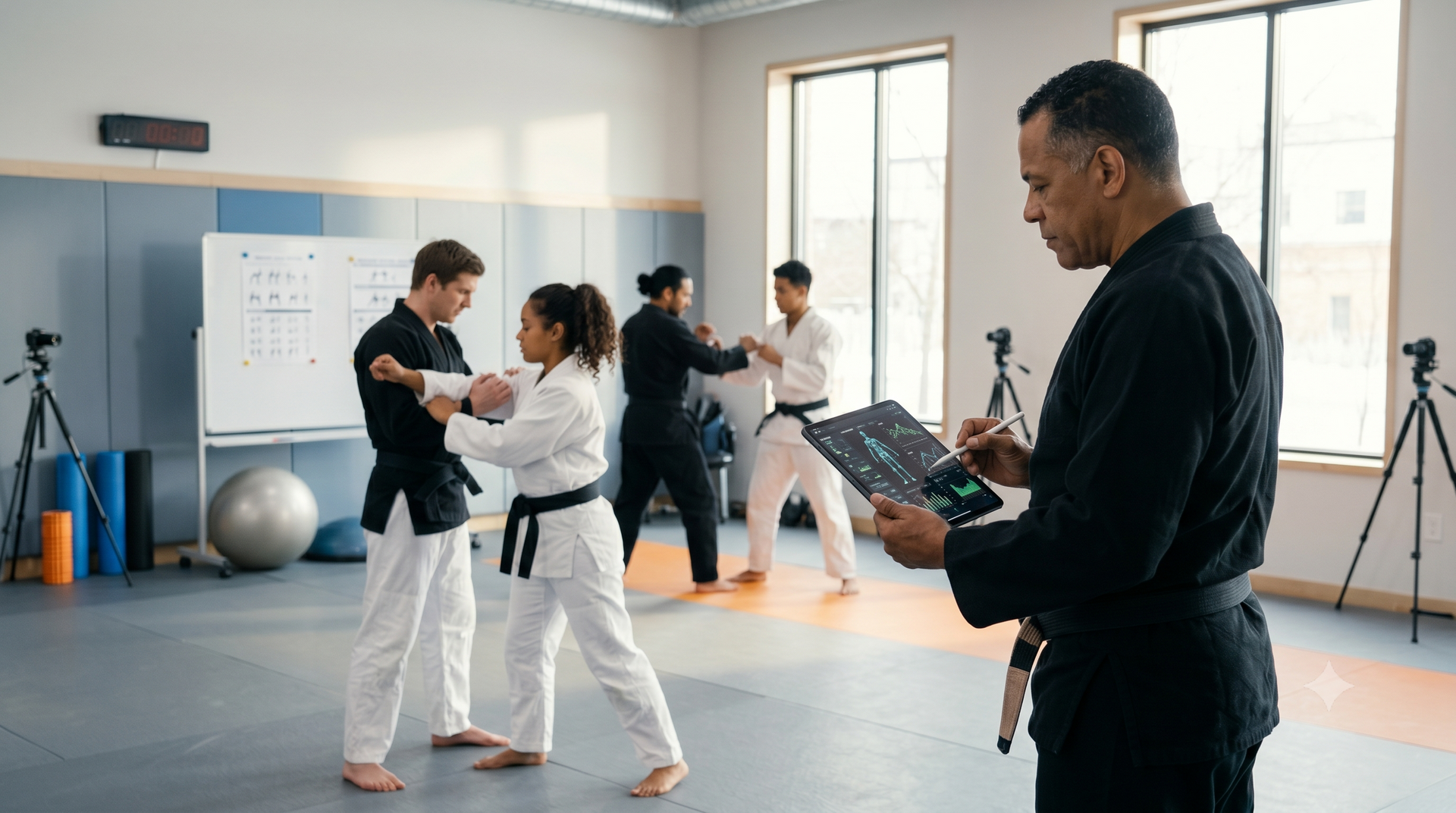
Pedagogical skills: How do you break down a complex movement for a complete beginner? How do you give feedback that actually improves performance rather than just correcting errors? How do you keep a class engaged for 45 minutes? These are teachable skills, and they're the ones that separate good instructors from average ones.
Class management: Handling mixed ability levels, managing difficult students, maintaining safety during sparring or contact work, adapting a session plan when things don't go as expected — all of this requires deliberate training.
Risk management: Every martial arts session carries inherent physical risk. An instructor who hasn't been trained in formal risk assessment is a liability risk for your club. This isn't about being overly cautious — it's about being professionally prepared.
Communication and leadership: Instructors are coaches, mentors, and role models. The way they communicate with students directly affects student retention, parent satisfaction, and club culture.
Business contribution: Your instructors are also representatives of your brand. How they interact with prospective students, how they handle enquiries, how they talk about the club — all of this matters to your business outcomes.
The AMACS Approach to Instructor Development
Our three-level course structure is designed specifically to address each of these components in a way that's practical, accessible, and industry-recognised.
AMACS Level 1 is the foundation. It focuses on risk management, basic class planning, and the essentials of delivering a martial arts session to beginners and intermediate students. It's designed for team leaders and assistant instructors who are taking on teaching responsibilities for the first time.
AMACS Level 2 goes deeper. It covers facilitation of groups, managing emergency situations, and more advanced class delivery skills. This is for instructors who are regularly leading their own sessions and need to handle a wider range of scenarios with confidence.
AMACS Level 3 is for senior instructors and head coaches. It covers planning and evaluating individualised training programs, observing and assessing student performance, and the kind of strategic coaching skills that produce high-level martial artists.
Taken together, the three levels create a complete instructor development pathway that takes someone from enthusiastic student to qualified professional.
Building a Timeline for Your Instructors
One of the advantages of the AMACS online format is that it can be integrated into an existing training schedule without causing disruption. Here's a practical timeline that works well for most clubs:
First three months: New assistant instructors enrol in AMACS Level 1 and complete it alongside their regular training commitments. They're given limited supervised teaching responsibilities during this period, which they can use as practical application of what they're learning.
Three to six months: After completing Level 1, instructors can begin taking on more independent session delivery. They enrol in Level 2 and continue building experience.
Six to twelve months: Senior instructors and those showing particular aptitude progress to Level 3. At this stage, you have a team member who is genuinely prepared to lead, run branches, and eventually take on head coaching responsibilities.
This kind of structured pathway gives your instructors a clear sense of progression and purpose — which matters enormously for retention. People who feel like they're developing professionally are much more likely to stay committed to your club long-term.
The Role of Ongoing Support
A development program isn't just about initial training. It's about creating a culture of continuous improvement.
AMACS graduates receive ongoing access to business and marketing content, webinars, and resources through our alumni network. This means the development doesn't stop at graduation — it continues in a more self-directed form as instructors advance.
As a school owner, you can reinforce this by holding regular instructor team meetings, sharing resources, setting goals for professional development, and recognising achievement publicly within your club culture.
The combination of structured formal training through AMACS and ongoing informal development within your club creates instructors who are genuinely committed to excellence — not just people doing a job.
What This Does for Student Outcomes
Every improvement in instructor quality translates directly into better student outcomes. When instructors know how to structure a session effectively, students learn faster. When instructors understand class management, beginners feel more welcomed and less overwhelmed. When instructors are trained in risk management, fewer injuries occur and the ones that do are handled professionally.
Better student outcomes mean better retention. Better retention means a healthier business. It's a direct causal chain.
This is why we say that investing in instructor development isn't just the right thing to do professionally — it's one of the highest-return investments you can make in your club.
Group Enrolments and School Owner Benefits
For school owners looking to enrol multiple instructors, we offer group discounts that make it financially straightforward to upskill your entire team.
The practical benefit is significant: instead of personally investing time to develop each instructor individually — time you probably don't have — you can hand that responsibility to AMACS, knowing that the content is industry-appropriate, professionally delivered, and standardised across your whole team.
When your instructors graduate, they've completed the same foundational program. They speak the same professional language. They apply the same standards. That consistency is something you simply can't achieve through informal development alone.
Starting Your Program Today
You don't need to have everything figured out before you start. The best approach is to identify your most promising instructor candidates right now — the people who are already stepping up, showing leadership, and taking pride in their teaching — and enrol them in AMACS Level 1.
Watch what happens to their confidence, their session quality, and their commitment to the club over the following weeks. Then build from there.
A world-class instructor development program doesn't require a significant upfront investment. It requires a decision to start. Visit our courses page or contact us directly, and we'll help you put together a plan that fits your club's current situation and goals.
Share