Train Your Entire Instructor Team at Once Group Discounts and the Full AMACS Suite
How School Owners Are Using AMACS to Build Qualified Teams Without Doing All the Teaching Themselves
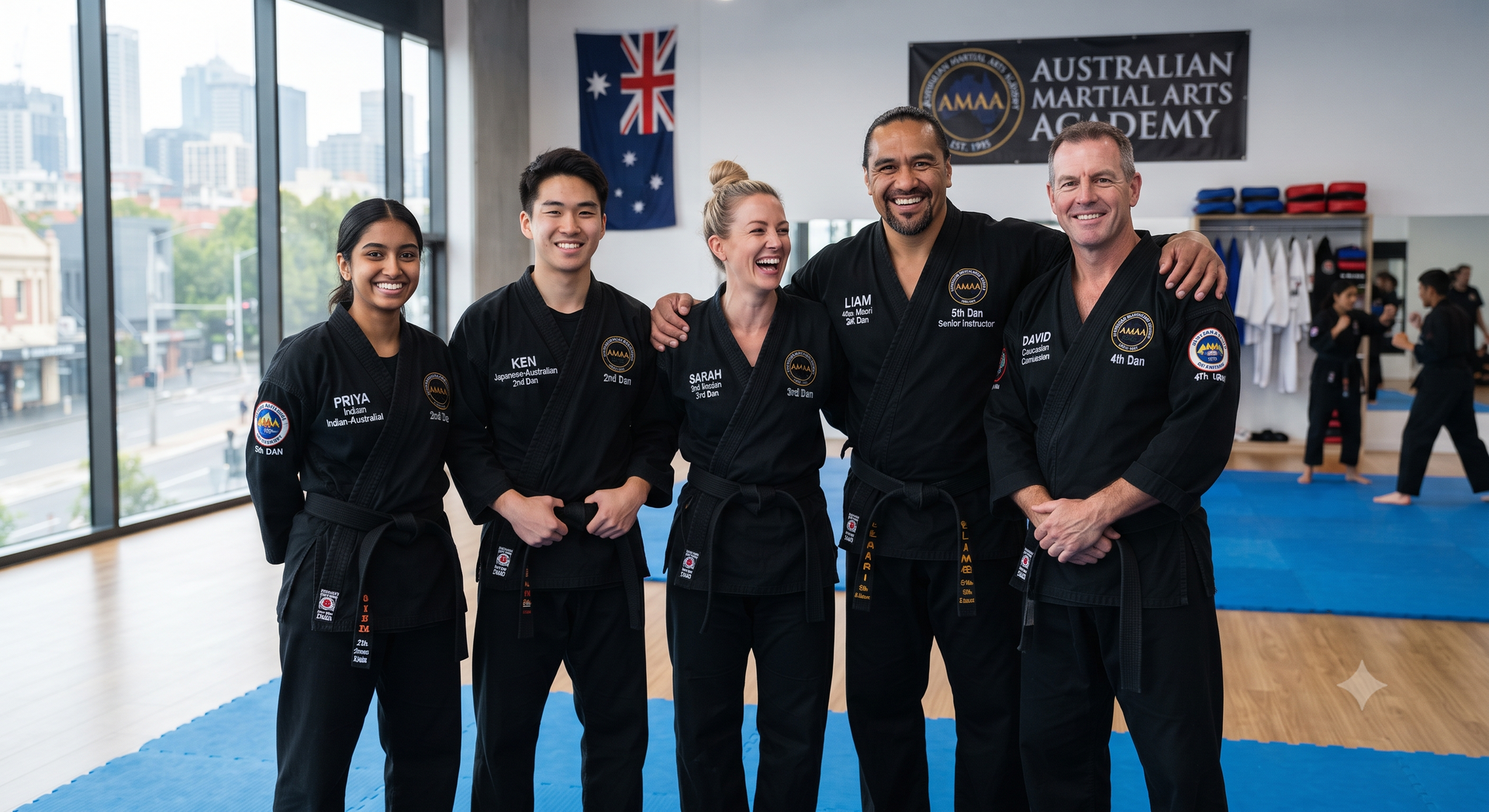
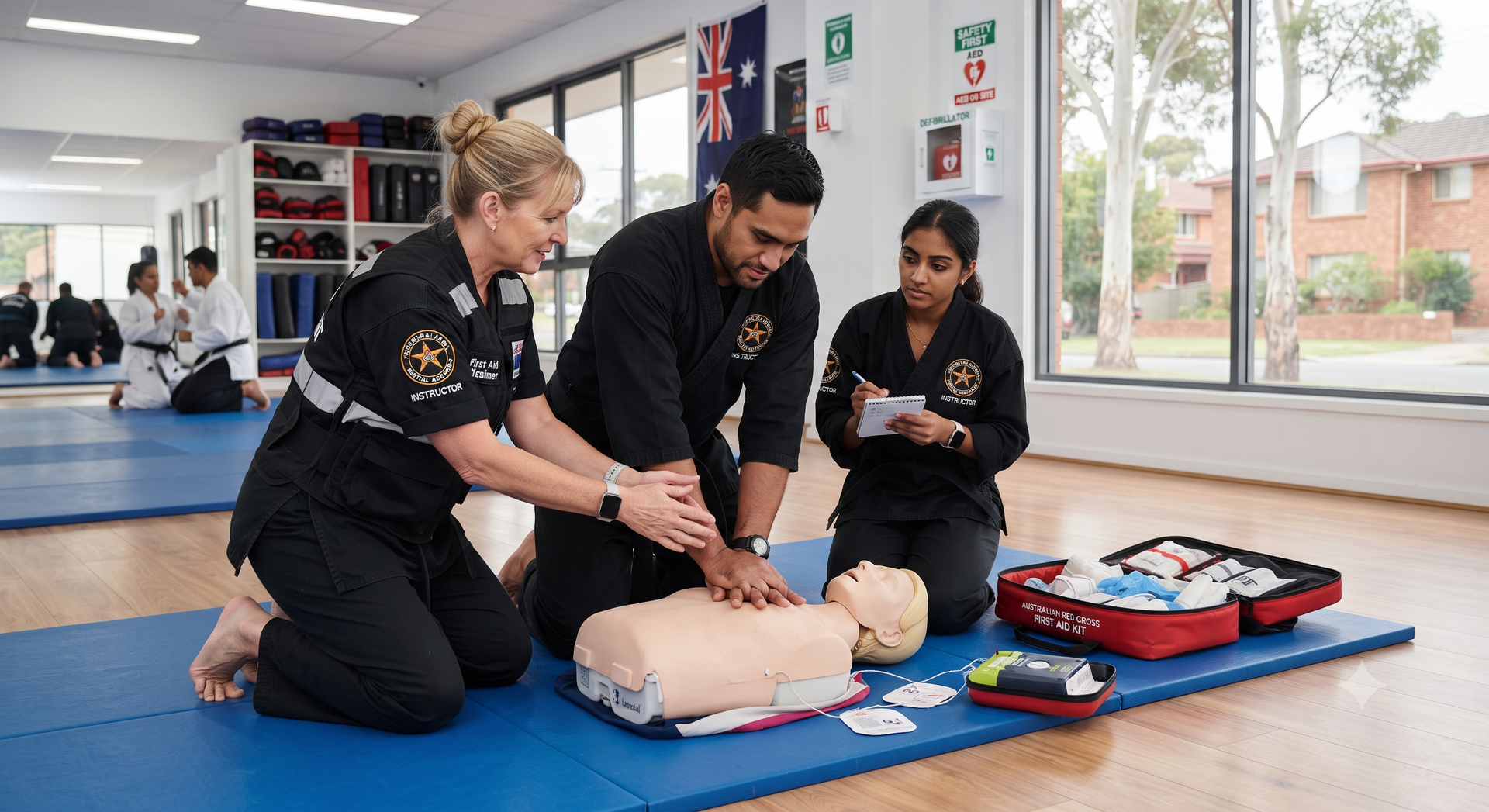
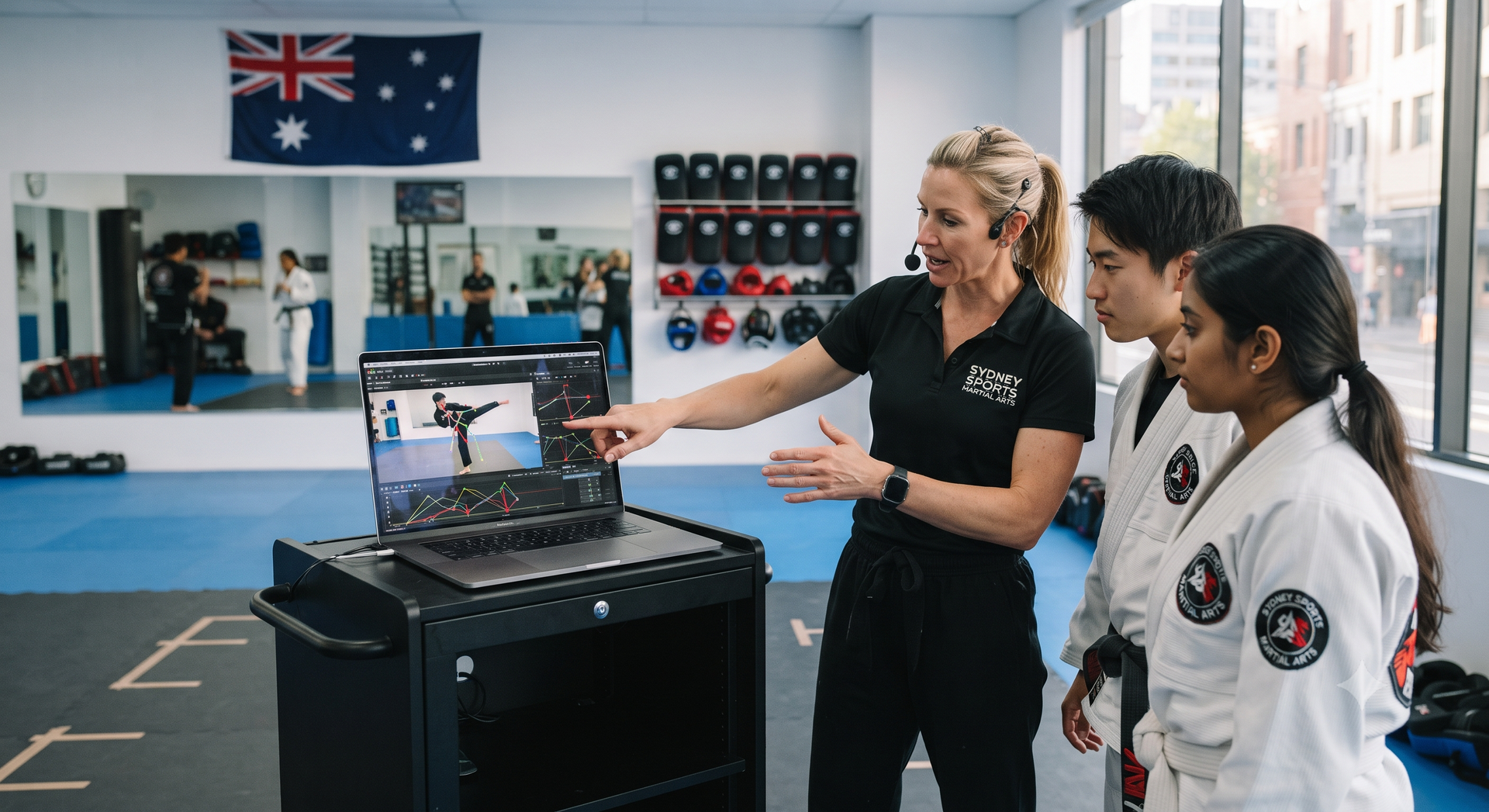
Here's the challenge every growing martial arts school faces at some point: you need more qualified instructors. You need people who can run a class to your standard when you're not available, who can assess students properly, who can manage an emergency, and who can represent your school professionally. And you need them to develop that capability without consuming all of your personal time training them yourself.
That's exactly the problem AMACS was built to solve for school owners. And when you enrol your instructor team together, group discount pricing makes the investment even more practical.
The Full Suite of Courses Available
School owners can enrol team members across any combination of AMACS courses depending on where each instructor is in their development:
AMACS Level 1 (from US$199) for assistant instructors and teacher helpers at the beginning of their formal coaching journey. Level 2 for those ready to go deeper into programming, evaluation, and customer service. Level 3 for senior instructors and those ready for school owner responsibilities, including the full suite of business operations, leadership, and legal content specific to the Australian martial arts industry.
The Judging and Officiating course is available for instructors who need the skills to assess gradings, run competitions, or officiate at events — an industry-endorsed qualification that adds genuine professional capability for schools that run regular gradings or host tournaments.
The Professional Defensive Tactics Course (PDTC) is available for instructors who work with security, law enforcement, or community self-defence audiences — a scientifically grounded system that has trained more than 10,000 security officers across Australia and internationally.
Other courses including Brazilian Jiu Jitsu and Alpha MMA specialist courses are also available through the portal for instructors who want technical depth in specific combat sports disciplines.
Study Your Way, On Any Timeline
Every course is self-paced, delivered online through courses.martialartsuniversities.com, and can be started at any time. The maximum completion time is 12 months per level — giving instructors genuine flexibility to study around their existing teaching, training, and life commitments. Many instructors complete Level 1 and Level 2 in a matter of weeks when they work through the content with focus.
There's no fixed schedule, no mandatory attendance, and no need for your instructor team to progress in lockstep. Each person can start where they need to start and progress at their own pace.
What Your Team Walks Away With
Instructors who complete the AMACS pathway earn credentials that are genuinely recognised within the Australian martial arts industry: Certified Practising Instructor (CPI) status, Certified Senior Instructor (CSI), and Certified Master Instructor (CMI) accreditations at the appropriate levels. In conjunction with Martial Arts Australia, your school can qualify for 6-STAR School Certification — one of the most visible markers of professional quality available in the Australian marketplace.
Your students and their parents notice this. Prospective students searching for a school notice this. The credential matters.
Structuring a Team Enrolment That Actually Works
Owners getting the most value from a group enrolment tend to approach it deliberately rather than simply signing everyone up for the same course regardless of where each person actually is. A useful starting point: map each instructor against the three levels honestly — who is genuinely still at assistant stage, who has been running classes competently enough to justify Level 2, and who is ready, or nearly ready, for the Level 3 content on business and leadership. Staggering enrolments this way means nobody is bored repeating content they already know, and nobody is stretched into material well beyond their current stage.
For schools that also run gradings or host competitions, adding the Judging and Officiating course for one or two senior instructors alongside their core level enrolment is a common and cost-effective way to build a specific capability the whole school benefits from, without needing every instructor to hold that particular qualification.
The Return on a Team-Wide Investment
School owners who have invested in developing their whole instructor team through AMACS consistently describe the same outcome: a school that can genuinely run without the owner being present for every single class, a more consistent standard of teaching across different instructors and different class times, and a visibly more professional operation from the perspective of students and parents. This is the difference between a school that depends entirely on one person's energy and one that has built a genuine team capable of sustaining and growing the business over the long term.
Group Enrolment Is Also a Retention Tool
Beyond the immediate skills gained, enrolling your team in AMACS courses together sends a genuine signal to your instructors that you are investing in their professional development, not just their unpaid volunteer time on the mat. Instructors who feel their school owner is genuinely developing them professionally are considerably less likely to leave for another school or to lose motivation over time. Group enrolment is, in this sense, as much a staff retention strategy as it is a training investment.
A Simple Way to Start the Conversation
If you are unsure where to begin with a team-wide enrolment, a short conversation with AMACS about your current instructor roster — how many people you have, roughly where each sits in their development, and what your school's specific priorities are, such as an upcoming grading season or a new self-defence offering — is enough to put together a sensible group enrolment plan and confirm the applicable discount pricing for your specific team size.
Planning Around Your School's Calendar
Group enrolments tend to work best when timed thoughtfully around your school's own calendar — enrolling instructors in the quieter weeks before a grading season or a competition period, for example, so they have genuine capacity to focus on the coursework rather than trying to study while managing an unusually busy teaching schedule. AMACS courses being self-paced with up to twelve months to complete gives you the flexibility to plan a group enrolment around whatever timing suits your specific school best, rather than being forced into a fixed academic calendar.
The Compounding Value of a Consistently Trained Team
The schools that benefit most from group AMACS enrolment tend to be the ones that treat it as an ongoing practice rather than a single event — enrolling new instructors as they come on board, encouraging existing instructors to progress through the levels over time, and periodically refreshing the whole team's qualifications as the AMACS curriculum itself is updated. Treated this way, professional development through AMACS becomes a standing part of how the school operates, rather than a one-off project that is completed and then forgotten.
One Investment, Many Instructors, One Consistent Standard
The single biggest structural benefit of enrolling your team together, rather than leaving each instructor to pursue qualifications independently on their own initiative, is consistency. A school where every instructor has come through the same AMACS pathway teaches to a genuinely shared standard, uses shared language around programming and student welfare, and presents a unified professional face to students and parents regardless of which instructor happens to be running a particular class. That consistency is difficult to achieve any other way.
Ready When You Are
There is no minimum team size required to access group pricing, and no need to have every instructor ready to start on the same day. Whether you have two instructors or twelve, reaching out to discuss your specific team is the simplest way to find out exactly what group enrolment would look like and cost for your school.
How Other Schools Have Structured Their Rollout
Schools that have gone through a full-team AMACS rollout typically describe a similar pattern: a small initial cohort of the most senior instructors completes Level 3 first, so the school's leadership genuinely understands the whole pathway before rolling it out further down the team. Assistant and junior instructors are then enrolled in Level 1, with a clear expectation of progressing toward Level 2 within a set timeframe. This staged rollout, rather than enrolling the entire team in everything simultaneously, tends to produce steadier completion rates and a more sustainable pace of genuine learning across the team.
Beyond the Course Content Itself
Group enrolment through AMACS is also an opportunity to build a shared professional language across your team — common terminology for programming, evaluation, and student welfare that makes staff meetings, handovers between instructors, and day-to-day coordination noticeably smoother. This shared language is a genuine, if less obvious, benefit that compounds the longer your team has been through the same training together. It also makes bringing on a brand-new instructor considerably easier down the track, since they can be inducted directly into an already-established shared framework rather than an ad hoc collection of individual habits, cutting the time it takes a new hire to feel like a genuine, integrated part of your teaching team.
Share
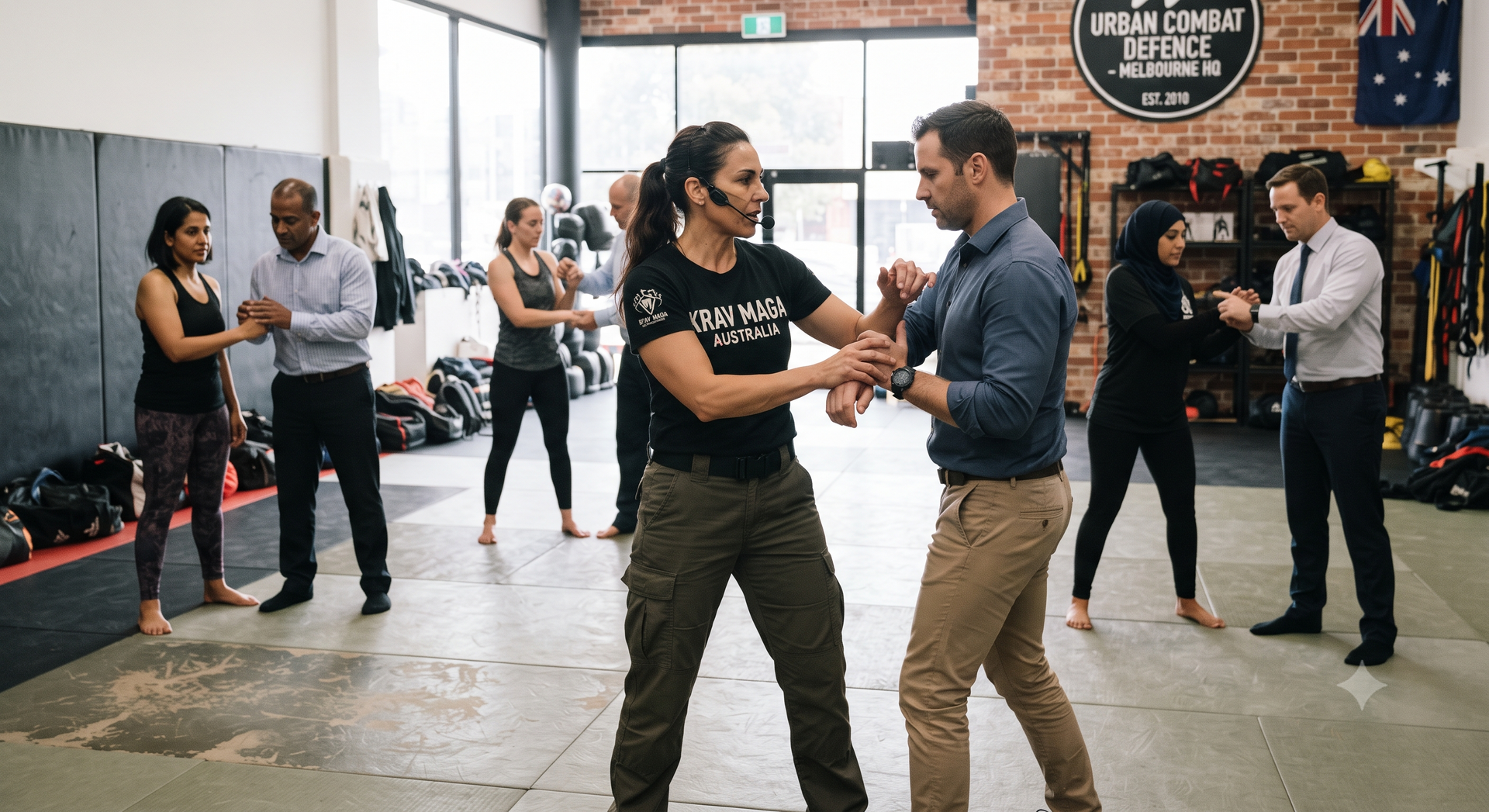
Teaching Self-Defence Professionally: The Course Built for Instructors Who Work With Real-World Risk